

Ancient Lydford Pennies on view at Museum of Dartmoor Life
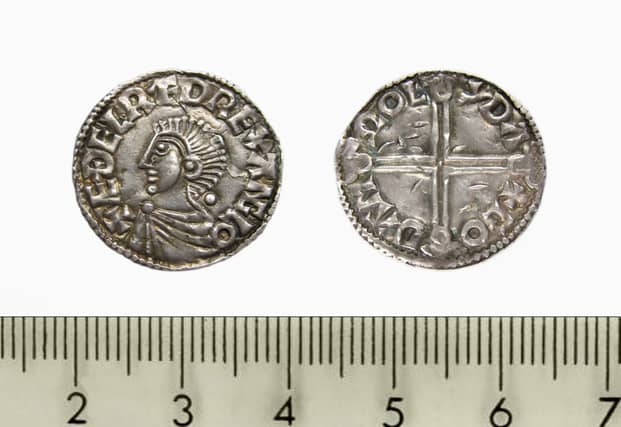

Thanks to Dartmoor National Park Authority, the Museum of Dartmoor Life, in Okehampton, now has on display three rare Lydford Pennies. King Athelstan united Anglo Saxon England under one ruler in 924. He decreed that only one coin, a silver penny, should
Thanks to Dartmoor National Park Authority, the Museum of Dartmoor Life, in Okehampton, now has on display three rare Lydford Pennies.
King Athelstan united Anglo Saxon England under one ruler in 924. He decreed that only one coin, a silver penny, should be in circulation and these were produced by moneyers around the country who bought the dies from the Crown.
Coins were struck between these engraved dies and hammered out separately. The name of the moneyer and the location of the mint was stamped on the one side to ensure quality control. The King’s head appeared on the other side.
Devon’s four Saxon mints were in Exeter, Totnes, Barnstaple and Lydford. Lydford already had the distinction of being a burh (fortified town) since the time of King Alfred, Athelstan’s grandfather.
The Lydford mint is now believed to have been in existence from 924 to the time of Edward the Confessor (1042-1066). The site of Lydford Mint is unknown, but the workshops may have been at the moneyer’s home. It is estimated that Lydford Mint produced more than 1.5 million coins, but none have ever been found in Devon. Most ended up in Scandinavia because of a tax or tribute paid to the Viking invaders, in the hope of ensuring peace.
An extract from the Anglo-Saxon Chronicle reads:
‘997, here in this year the raiding army travelled around Devonshire into the Mouth of the Severn and there raided, both in Cornwall and in Wales and in Devon… [they] wrought great harm there by burning and slaughtering of men, and after that turned back into the mouth of Tamar and then went up until they came to Lydford and burned and killed everything they met, and burned down Ordwulf’s monastery at Tavistock and brought indescribable war booty with them to the ships.’
A silver penny had great value; a sheep cost 3-5 pennies, a pig cost 10 and a cow 20.
These beautiful silver coins can be seen on display in the museum along with large photographs so you can more easily appreciate the workmanship of the moneyers. Children can do a rubbing of a large model Lydford coin to take home.