

North Devon farmer convicted after slurry spills kill hundreds of fish


Michael Wade from Bideford must pay almost £4,800 following an Environment Agency prosecution over two slurry pollution incidents
A Bideford farmer has been convicted of two counts of illegally discharging slurry into watercourses that caused the deaths of hundreds of fish.
Michael Wade of Higher Melbury Farm pleaded guilty at Barnstaple Magistrates Court on Monday, March 9 to two counts of illegal water discharge activity.
In a prosecution brought to court by the Environment Agency, he has been ordered to pay a total of £4,778 after being fined £340, given a victim surcharge of £136 and costs of £4,302.
Court fines are determined based on the financial circumstances of the offender. The court heard the farm had previously paid £11,130 to the EA to cover the costs of dealing with the more major pollution incident.
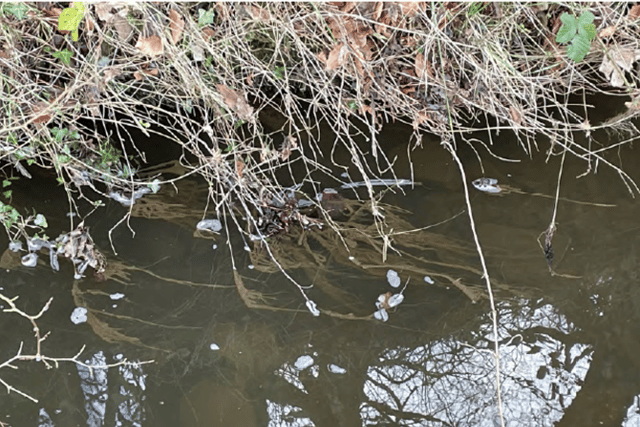
Above: Photographs taken on the day showed sewage fungus in the ditch. Credit: Environment Agency
In the 2023 incident, slurry discharged from the farm near Woodtown via a ditch into a tributary of the Dipple Brook.
The pollution had travelled in the water for 1.6 kilometres and sewage fungus in the watercourse showed the discharge had been occurring for some time.
Then in August 2024 slurry was seen discharging from a ditch at the farm into a tributary of the Holebrook.
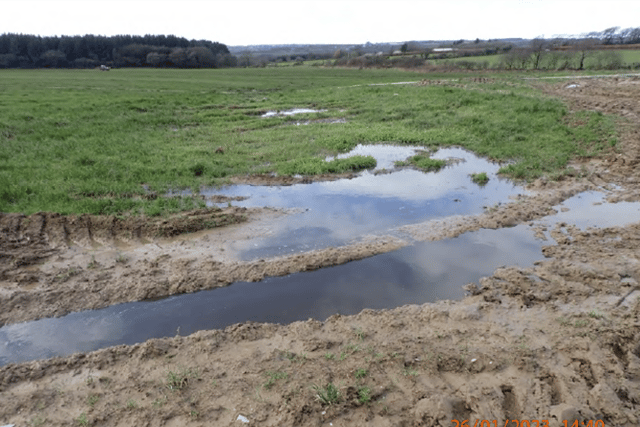
Above: The Environment Agency said the ground was saturated with slurry. Credit: Environment Agency
More than 300 dead fish were collected from the watercourse, which included salmonids and lamprey.
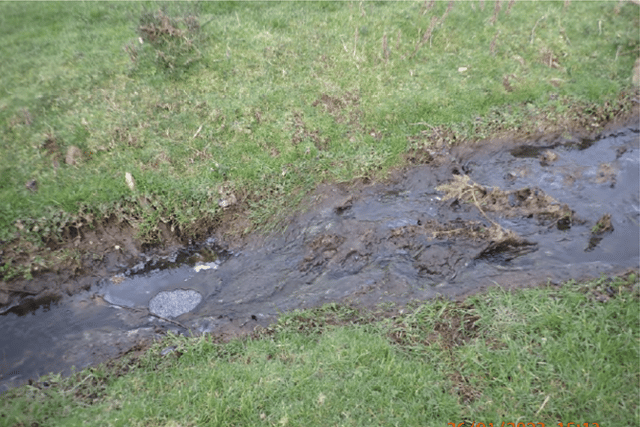
Above: The watercourse running along the boundary of the field. Credit: Environment Agency
Nicola Rumsey, EA environment officer said: “Farmers have a responsibility to ensure that slurry is properly stored and spread, to avoid the risk of harm to the environment.
“If farmers have concerns about not having sufficient slurry storage capacity, we recommend they contact us, so that we can give advice ahead of time and avoid an incident.
“When incidents do happen, these can kill fish and impact water quality, as well as requiring significant resources to clean up.”
Guidance for farmers on appropriate storage is available on UK Government website: Storing silage, slurry and agricultural fuel oil