

Peter Moore: From ‘Back of Beyond’ to Belonging: How Torbay Hospital Is Transforming Medical Student Experience
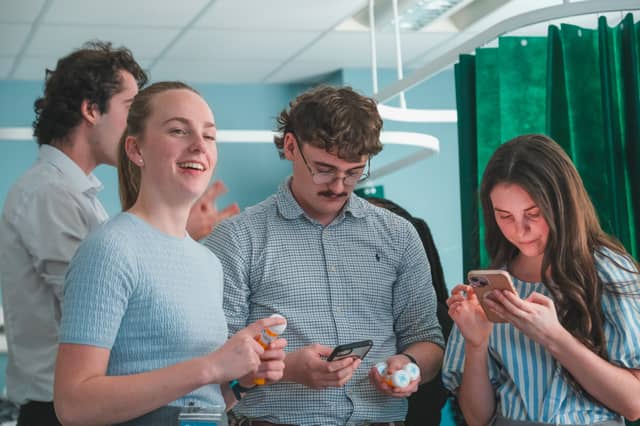

Student-led initiative STORMS is turning placements into thriving communities, boosting confidence, connection and real-world learning for future doctors in the Bay.
When a medical student at Plymouth University was allocated a placement at Torbay Hospital he was disappointed.
He would be in the back of beyond, away from the main, important hospital. It did not work out as he expected. He loved his time here, loved working in the Bay and, when he was about to qualify, applied for one of his first jobs as a doctor in Torbay Hospital.
Recently I was asked to be one of the judges for student projects. They were a very high standard and any of them could have won but I was struck by something else. They were a great bunch of people giving me hope for the future of our profession. I am also confident that I could not have produced work of this standard when I was a student.
So how do they manage to turn a placement in the sticks into a valuable and enjoyable part of their course? Torbay Hospital host over one hundred medical students from both Exeter and Plymouth Universities as well as other students who apply for an attachment. Students from year five, the final year, have a four to six week placement here. Those from years three and
four rotate through a different speciality each week. Plymouth is planning to offer longer attachments at Torbay next year. Many students do not know each other when they arrive and feel isolated from their university. There is a serious risk that these students could suffer from depression.
In 2023 the students themselves came together to form a group they named STORMS (Student Torbay Medical Society). The idea was to offer social events, academic opportunity and mentorship to students with a placement at Torbay Hospital. It is free to all medical students Most importantly it is run by the students for the students.
Social events are arranged so that students from different universities meet up and enjoy a great social life. There is even the occasional pub crawl. Maybe they can sample our local
Bay’s brewery.
Just because Torbay is not called a University Hospital this does not mean there is no research or academic rigour. One student told me that in Torbay they had far more opportunities to see “real medicine”. In the university hospital there were not only more medical students but also student nurses, physiotherapists and many other professions all trying to get a look in. At Torbay teaching is more personalised. Although we all learnt some medicine from books there is no substitute for seeing real patients. Covering a population of 300,000 often older people there are plenty of fascinating cases at Torbay. Workshops are
supported by tutorials from both consultants and resident doctors. The idea would not work without the wholehearted support of the incredible Torbay Hospital staff and patients who have been very welcoming. Future leaders will develop with help and guidance from the hospital team. The organisation of the conference where I was a judge largely came from the students.
Whisper is quietly but it was far better organised than many other medical events I have attended over the years run
by experienced doctors and managers, STORMS allows students to have their voices heard through feedback from their student
representatives from each year. This is vital. So has it worked? Students reported a closer integration and a greater sense of belonging.
They felt it brought together the student community, academic opportunity, advocacy and
mentorship. Students felt less isolated. At the conference there was a talk about coping with failure. Today’s medical students have had a successful time at school and achieved brilliant A levels. Suddenly they are average as all the other students are equally successful. This can create anxiety. I pointed out that failure is not necessarily a disaster. Both of us “expert” judges failed our eleven plus.
Storms is one of the many success stories from Torbay Hospital. There have been forty-two members over three years and students from all years felt a stronger sense of belonging. This innovative scheme could be copied throughout the country.
The future of my old profession is in good hands. In years to come some of these students may even decide that Torbay in a great place to settle down.