

Torbay remembers those who gave their lives during National Service


Veterans and civic dignitaries pay respects at Paignton war memorial service
A special memorial service has been held in Paignton to remember those who gave their lives during National Service.
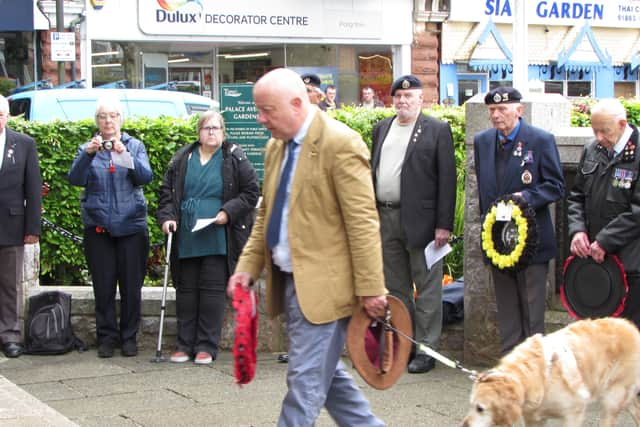
Torbay MP Steve Darling lays a wreath at the Paignton National Service memorial event
The end of World War 2 did not bring an end to the British military commitment abroad.
Britain still needed to maintain her demanding Empire, occupy post war Germany and Japan and re-establish influence in the world, particularly in the Middle East. The Cold War between communist USSR and the capitalist USA placed new demands on British manpower.
Indian Independence in 1947 meant that Britain no longer had the huge Indian army at its disposal. To solve this manpower shortage and meet new post war challenges, wartime conscription was extended into an obligatory period of National Service for men of military age.
In 1947, it was announced that all able-bodied men between the ages of 18 to 30 were to be called up. This was quickly changed to all men between the ages of 17 and 21.
Initially conscripts served for 18 months but 1950, during the Korean War (1959 – 1953) this was increased to two years.
Between the National Service Act coming into force in 1949 and the last National Serviceman being demobbed in 1963, more than two million men were conscripted into the Armed Forces.
The last National Serviceman to be demobbed, on May 16, 1963, was 2nd Lt Richard Vaughan, of the Royal Army Pay Corp.
National Servicemen served all over the world and were involved in frontline fighting in Borneo, Kenya, Malaya, Cyprus, Korea and during the Suez Crisis.
They found themselves in places like Christmas Island, Aden, Jordan, Kuwait, Bahrain and Egypt. For many this was the first time they had been abroad let alone lived in a foreign country.
Between 1949 and 1962, a total of 2,578 National Servicemen died. Of this number 395 were killed in action.