

Calls for ‘fire summit’ as pressure mounts on Devon and Somerset service
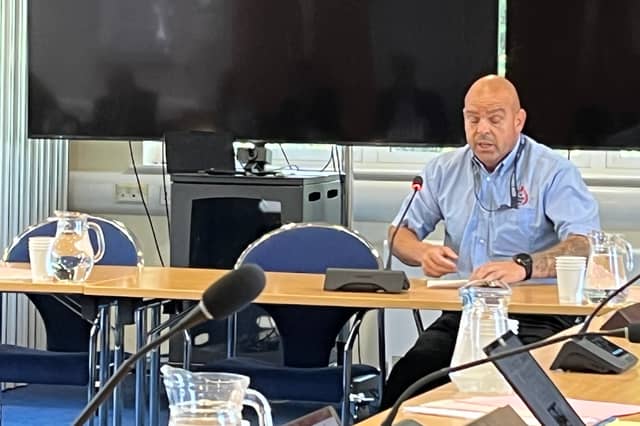

A call has been made for a “fire summit” to bring together key organisations to discuss the growing pressures facing Devon and Somerset Fire and Rescue Service.
Members of the fire authority, which oversees the service, have backed calls for a summit to raise concerns over funding, staffing and the changing demands being placed on firefighters. The service has forecast a ‘best case’ funding gap of £3.9 million over the medium term, even if it increases its share of council tax by the maximum amount allowed over the next five years.
At the same time, firefighters are increasingly being called upon to deal with incidents such as wildfires and flooding, which can require crews and appliances to remain at an incident for considerably longer than more traditional call-outs, despite the number of house fires and road traffic collisions generally falling.
Another growing concern is inland water rescue. Fire and rescue services in England do not receive specific funding for this work, despite increasingly being called upon to respond to flooding and other water-related emergencies.
The issue of funding was highlighted during a meeting of the Devon and Somerset Fire and Rescue Authority, where Councillor Alan Connett (Liberal Democrat, Exminster and Haldon) proposed that the authority convene a summit.
“It could talk to the real perils across Devon & Somerset and lay out before national and local decisionmakers the very real risk to the fire authority, which echoes the very valid points raised by colleagues in the union,” he said.
“We can’t simply hear these concerns and do ‘nowt’; what do we do, as a constructive, positive organisation, to tap on the door of Number 10?”
The idea is that key local and national decision-makers could be brought together to hear directly about the pressures facing the service.
The Fire Brigades Union has warned that efforts to find savings must not undermine the service's ability to respond safely and effectively. Chris Grantham, brigade secretary for the FBU, said targeted savings being pursued by the service now amounted to around £1.9 million.
“We are already seeing fire appliances responding with minimal crewing of four personnel, and we are concerned that any further reductions in the budget could have a direct impact on our ability to respond effectively and safely,” he said.
He said firefighters hoped the savings would not come to the “detriment of frontline firefighter posts or operational crewing”.
Chief fire officer Gavin Ellis said he would be “fully supportive” of holding a summit to raise the profile of the issues facing the service.
“The strength we have as officers and members is really important, and [a summit] is something we should do collectively and include representative bodies,” he said.
“Firefighter safety is paramount, and since 2015 we have seen a continual reduction in central government grants.”
Mr Ellis described Devon and Somerset as a “lean organisation”, adding that it was the largest employer of on-call firefighters – previously known as retained firefighters – in the country.
“We do expect a busier winter, and at some point we need discussions in terms of what might need to change due to demand growing outside our control,” he added.
The pressures facing the service extend beyond conventional firefighting. The frequency and severity of extreme weather events has also become an increasing consideration for emergency services, with fire crews often among those responding when communities are affected. Funding pressures are also being felt in ongoing discussions with unions over Pay for Availability, or P4A, which concerns the way on-call firefighters are paid.
The service is continuing to examine how its wholetime firefighters are rostered as part of efforts to reduce costs, while a 12-month review of its animal rescue capabilities is also under way.
The service relies heavily on on-call firefighters, particularly across the large rural areas of Devon and Somerset, making the availability and retention of those crews an important part of its operational model.
For Devon and Somerset Fire and Rescue Service, the challenge is not simply the number of incidents it attends, but the increasingly complex and time-consuming nature of those emergencies – at a time when the authority says its finances are already under considerable strain.