

First steps taken for legal challenge against Devon council shake up
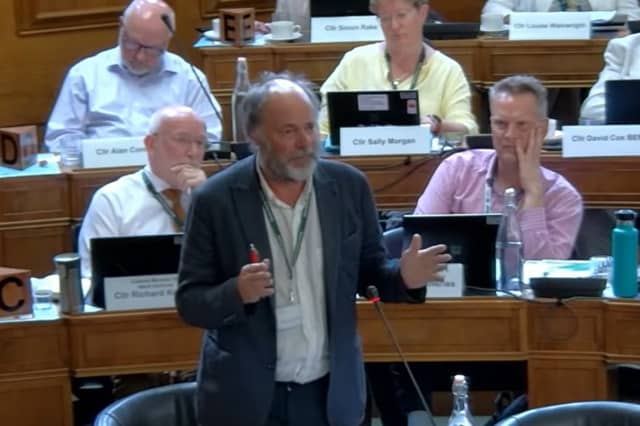

Devon County Council has taken the initial steps for a potential judicial review into Government plans to carve up the region’s councils
The first preparatory steps for a potential legal challenge against government attempts to carve up Devon’s councils are underway.
Devon County Council is expected in the coming days to submit Freedom of Information (FOI) requests to the government department that has overseen the overhaul of local government.
Council leader Julian Brazil has said officers were preparing the requests to the Ministry for Housing, Communities and Local Government (MHCLG) that has led to the once-in-a-generation overhaul of how councils work.
Currently the Government’s chosen option is to create larger Exeter, Plymouth and Torbay unitary authorities and the rest of Devin will be lumped into a ‘Coast and Countryside’ council.
Cllr Brazil said: “After those [FOIs], we have to submit a pre-action letter that outlines our intention before the end of July and then we have a cabinet meeting in September and that’s when we will take a formal decision about the judicial review.
“We have until October 16 to make the decision and formally launch the judicial review; if we haven’t done anything by then, we would be out of time.”
The development comes as Green Party councillors on Torridge District Council have also called for a judicial review as they believe the outcome of the local government restructure (LGR) for Devon “treats rural communities with contempt.”
A joint statement from the district’s Green councillors said: “This is the worst of all worlds for Devon’s small towns, villages and rural communities.
“The government either just doesn’t care about rural communities or simply doesn’t understand that the challenges they face differ from urban areas.
“The cities do nicely out of this. They’ve snatched parishes from surrounding areas for housebuilding and other expansion.
“Meanwhile, the left-over small towns and rural communities have all been dumped into a huge and unwieldy authority with 455,000 residents but a geography that makes no sense.”
The Green Party members said because the mooted coast and countryside council would stretch from Hartland to Axminster and Combe Martin to Salcombe, with no major towns, it would create significant challenges.
They added: “To drive across this new authority would take well over two hours even if you assume no delays and no roadworks. That’s as long as it takes to get from Westminster to Bristol.”
Cllr Brazil said he hoped to gain support for the review from all councillors on the county council, which is facing abolition as part of the local government reorganisation plans.
Councillor Michael Fife Cook, leader of the Reform UK group, said he was “on the same page” as Cllr Brazil on this issue.
He said: “From day one I thought [LGR] was a ludicrous idea and we all know why Labour has embarked on it, and that’s because Labour is still frightened of the Tory shires even though they don’t really exist.
“To me, I became a councillor to make things better for people and to try and work with everyone, but LGR cuts across politics. It is damaging to Devon and for how we can provide services for young and old, and the cost [of the reorganisation process] will be an absolute fortune.”
Cllr Brazil hoped the review would not be needed, because of faith that new prime minister Andy Burnham would put the brakes on the council overhaul in Devon.
Last week saw Steve Reed MP tell Parliament that Devon’s 11 councils would be scrapped in favour of four new large unitary councils.
The proposal states that Exeter, Plymouth and Torbay will subsume parts of existing neighbouring districts, while the remainder of the county would be comprised of a so-called coast and country council.
Cllr Brazil has previously said that given the estimated cost of reorganising Devon’s councils – which has been put at between £50million to £70million – the cost of a judicial review would be value for money.
He also said he had the delegated authority to order a judicial review even if there wasn’t widespread support for such a move.