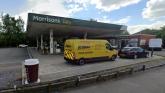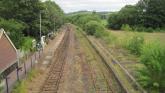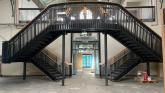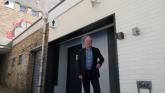
Cllr John Birch, ward member for Totnes, at the Civic Hall toilets, and pictures of the refurbished loos.
Search


15 Apr 2026

Please allow ads as they help fund our trusted local news content.
Kindly add us to your ad blocker whitelist.
If you want further access to Ireland's best local journalism, consider contributing and/or subscribing to our free daily Newsletter .
Support our mission and join our community now.
To continue reading this article, you can subscribe for as little as €0.50 per week which will also give you access to all of our premium content and archived articles!
Alternatively, you can pay €0.50 per article, capped at €1 per day.
Thank you for supporting Ireland's best local journalism!


Things are rarely ever as simple as they appear on the surface and the contentious subject of grazing in a Site of Special Scientific Interest (SSSI) is no exception.
In fact, underlying all the perceived politics of Higher Level Stewardship and other similar agreements, commoners and graziers often have to deal with their own local politics, the likes of which outsiders are completely unaware. It is always a balancing act, one that is threatened to tip wildly one way or the other with the slightest nudge from behind.
The increasingly-difficult task of balancing all needs in one location will probably never have a single, simple solution. Graziers need to graze their hefted flocks, the military need their firing ranges, Dartmoor needs the tourists and the National Park needs to fulfil its role of ‘conserving and enhancing’ its natural assets. Which cause should take precedence?
Each of these is important and it’s only when interests conflict that problems arise. Rewilding or swaling? Farming or tree planting? Fences or no fences? The age-old war has yet to be brought to peace. Throw money into the mix and we see a whole new battle arise.
Whilst it is said that Okehampton Common is in ‘unfavourable condition’ within the remit of being a SSSI, the drastic solution tabled is also unfavourable to those graziers affected. Clearly something needs to be done to regenerate the land, but who will take responsibility of holding the scales?
After numerous attempts by many people to obtain a definite reply to the claims that Natural England is telling graziers on Okehampton Common to reduce their sheep numbers ‘as close to zero as possible’ over the winter months, The Moorlander has received this response.
Dear Ms White
Natural England has worked with agreement holders across Dartmoor for many years, supporting them with advice to help them balance the delivery of their agri-environment schemes against their farming needs.
So, it was deeply disappointing to see the way in which your recent article misrepresented Natural England’s role with respect to our advice to Environment Stewardship agreement holders on Okehampton Common.
I would draw your attention to the following inaccuracies contained in the article and ask that this letter is published in full to put the record straight.
Your articles states:
Environmental Stewardship Higher Level Schemes (HLS) are voluntary and publicly funded agreements. They are a contract between the agreement holders and the Rural Payments Agency (RPA). Natural England’s role is to provide technical advice to the RPA and agreement holders on whether their current management will deliver the publicly funded HLS agreement outcomes. Where evidence shows that management undertaken and funded through the agreement is not securing the environmental improvements required by the scheme we will advise accordingly. Only the RPA have the authority to make any adjustments to an agreement.
To state our impartial evidence-based advice on the current delivery of agreed HLS outcomes on Okehampton Common somehow signals an end to farming on this common or elsewhere is a complete fabrication.
Following surveys in 2018 and subsequent site checks in 2019, we provided advice to the agreement holders that the evidence indicated their current management was not delivering the environmental improvements required by their agreement.
It is now for the agreement holders to decide how they respond to this advice and we will continue to support agreement holders with further advice on any management adjustments they propose. Any management adjustments they make during the agreement period needs to be formally agreed with the RPA, not Natural England.
We are not aware of any decision regarding changes to the current HLS agreement on Okehampton Common so to suggest a decision has been made and that this is something Natural England has initiated is inaccurate and misleading.
HLS agreements are not subsidies, they are voluntary agreements entered into by land managers with the RPA and are drawn up to deliver specific publicly funded outcomes. Okehampton Common is part of the North Dartmoor SSSI and one of indicators of success of the Okehampton Common HLS agreement is to restore the upland heathland vegetation that forms part of the SSSI designation. The evidence collected in 2018 indicated that this outcome is not being met.
We are not aware of any new ruling affecting the Okehampton Common HLS agreement. Your article wrongly infers that Natural England has somehow introduced a ruling.
The HLS agreement on Okehampton Common is not with individuals but with the Commoners Association. It would be inappropriate and unprofessional of us to have separate conversations with individual commoners when the agreement is held collectively by all agreement holders.
We have never declined to have a meeting with the Association. In late September an initial proposal was sent to us but to date we have not received a final proposal from the Commoners Association setting out their collective view on how they propose meeting the agreement outcomes.
Our advice is that the current level of winter sheep grazing is having a significant impact on the heathland vegetation in particular and we have advised that this issue needs to be addressed if the SSSI condition is to be restored.
However, it is for the agreement holders to now decide how they wish to respond to our advice, seek further advice from us if they wish and agree with the RPA on any adjustments they intend to make to deliver the agreement outcomes.
It is accurate to say there are no Environmental Stewardship schemes on Dartmoor that require complete removal of livestock. Indeed, all Environmental Stewardship schemes on Dartmoor recognise the important role sheep, cattle and pony grazing plays in maintaining Dartmoor’s cultural landscape and wildlife heritage.
The quote you carry from a member of Natural England staff fails to mention that this advice was given in the context of evidence that showed current grazing levels on the common are damaging the heathland vegetation and that in our view radical action was needed to address the issue before the current agreement expires in 18 months.
Natural England is not dictating to agreement holders and our advice was to alert them that the agreement outcomes were not being met and advise them on what changes we think they need to consider in order to ensure they deliver on their agreement.
To suggest otherwise is a complete misunderstanding of our role and misrepresentation of the advice we have given.
Commoner’s rights are not affected by their HLS agreement. The numbers of grazing animals proposed at the start of the agreement reflect the grazing management required to deliver the agreement outcomes.
The agreement holders are aware that these management prescriptions might require adjustment during the lifetime of their agreement if the evidence indicates the outcomes are not being met. Where we identify that agreement outcomes are not being met we must say so.
Natural England does not have any role in payments to farmers, this is a matter for the RPA.
While we are happy to receive feedback based on the facts these should be directed to Natural England at devoncornwallandislesofscilly@naturalengland.org.uk and not at any individual member of Natural England staff.
Yours sincerely
Wesley Smyth
Area Manager.
Devon, Cornwall & Isles of Scilly Area Team.

Subscribe or register today to discover more from DonegalLive.ie
Buy the e-paper of the Donegal Democrat, Donegal People's Press, Donegal Post and Inish Times here for instant access to Donegal's premier news titles.
Keep up with the latest news from Donegal with our daily newsletter featuring the most important stories of the day delivered to your inbox every evening at 5pm.