

Textile banks to close across Devon as ‘fast fashion’ hits recycling services
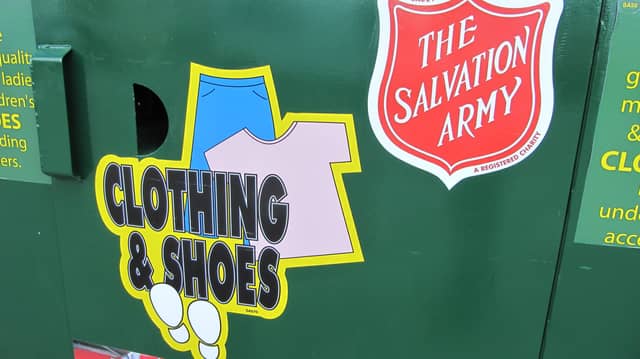

Devon County Council and local waste authorities say residents still have alternative options for recycling and donating unwanted clothing
Twenty-seven Salvation Army clothing and textile banks across Devon are due to close at the end of January, following what the charity describes as difficult conditions in the global textile market.
The changes were confirmed in a press release issued by Devon County Council on 16 January, on behalf of the Salvation Army and the Devon Authorities Strategic Waste Committee, which represents 10 local councils.
Residents in West Devon and nearby Dartmoor communities will be affected by the removal of one local bank, at Hatherleigh Car Park, Knights Court, off Bridge Street.
Other sites set for closure include locations in Torridge, Torbay, Teignbridge, Mid Devon, North Devon, Exeter and East Devon.
Many of these are in car parks, with Holsworthy, Appledore, Westward Ho!, Torquay, Paignton, Dawlish, Teignmouth, Moretonhampstead, Widecombe-in-the-Moor, Tiverton, Braunton, South Molton, Croyde Bay, Exeter and Colyton seeing removals.
Salvation Army Trading Company Ltd (SATCoL), which manages the charity’s clothing banks, said the changes were made in response to wider pressures affecting the textile market.
“Following a strategic review of our clothing bank network in response to changing market conditions, and to ensure long-term sustainability and responsible stewardship of donations, we are adjusting our clothing bank network.”
The charity said fast fashion and ultra-fast fashion have flooded the market with low-quality clothing that has little resale value, making textile recycling increasingly difficult.
According to figures referenced in the release, more than two tonnes of clothing are bought every minute in the UK, producing almost 50 tonnes of carbon emissions.
Oxfam estimates that in just one month, the carbon footprint of new clothes bought in the UK was greater than flying a plane around the world 900 times.
Councillor Jacqi Hodgson, Vice Chair of the Devon Authorities Strategic Waste Committee, said the closures were disappointing but understandable.
“The rise in cheap, low quality clothing is causing a huge problem for the second hand textile industry and the environment. We have worked with SATCoL for many years and understand the difficulties of the textile markets.”
She added that consumers could help by buying fewer clothes and making better use of what they already own.
In response to questions from The Moorlander, the Salvation Army said that while some banks are closing, many sites will continue to be available across the county.
“Many clothing donation banks will remain available for public use. Members of the public can search on our map finder which includes all the bank locations available” a spokesperson said.
The charity also highlighted alternative donation options, including its donation centre at Haven Road, Exeter (EX2 8BP), and a Donate by Post service.
The spokesperson said there are no further changes planned at present.
Devon residents affected by the closures are being encouraged to consider other ways to reuse or recycle textiles.
These include donating to charity shops, using household waste recycling centres, checking in-store textile recycling at some high street retailers, or visiting local Repair Cafés for basic clothing repairs.
More information about reducing, reusing and recycling textiles is available at the Recycle Devon website.