

'Fewer ponies means more fuel for the next fire,’ Plymouth council warns
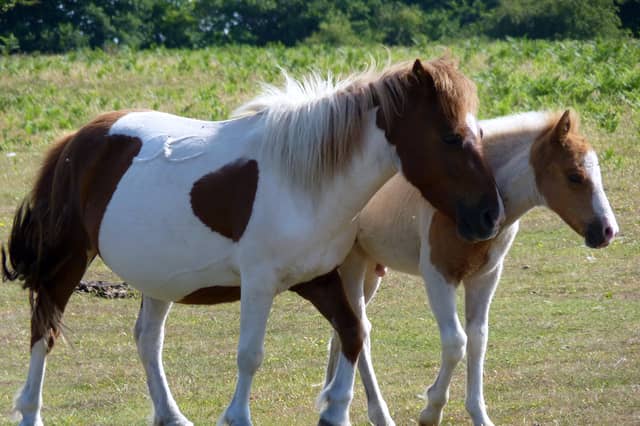

Plymouth City Council has backed calls to protect Dartmoor hill ponies, warning that proposed changes to Natural England grazing contracts could increase wildfire risk and threaten the moor
Councillors have thrown their weight behind protecting Dartmoor hill ponies, urging ministers to exclude them from new Natural England contracts.
For the first time, hill ponies will be counted within agri-environment scheme stocking calculations alongside cattle and sheep.
There are fears these ponies, which have grazed the moor for more than 4,000 years, could disappear in favour of more commercially viable animals as Dartmoor commoners face an "impossible choice".
Presenting a motion to protect the Dartmoor ponies to Plymouth City Council on Monday, Cllr Daniel Steel (Lab, Plymstock Radford) said that, while there was no direction to cull the ponies, the financial incentives for commoners to remove them from the moor could put the current population at risk during this autumn's drift (the annual round-up of hill ponies on the moor).
Campaigners say up to 90 per cent of the semi-wild pony population could go.
An online petition to stop this happening has so far been signed by more than 200,000 people.
Cllr Steel said the move "directly contradicts the independent Fursdon Review, commissioned by the government in 2023", which accepted the recommendation that "ponies and cattle should not be linked for agri-environment stocking calculations and that Natural England should not take actions likely to result in a decline in pony numbers".
He said: "Peer-reviewed research shows Dartmoor ponies uniquely graze invasive purple moor grass (Molinia) that cattle and sheep will not eat, meaning protecting the ponies and the moor's biodiversity are the same task, not competing ones."
The council accepted the motion, seeking a "clear public assurance" from the government that Dartmoor hill ponies will be excluded from any cull this autumn and in future years.
Cllr Ray Morton (Lab, Honicknowle) said the government had indicated it did not want pony numbers to be cut, so it "had been listening".
"We need them to act so the risk is gone for good," he said.
"Natural England sets a limit on how many animals can graze the commons, and the ponies get counted alongside all the livestock, so a commoner trying to keep the animals that pay the bills can be left with an impossible choice.
"No one orders it; it just happens. The ponies are the ones who quietly disappear. That is the risk this motion is trying to put beyond doubt.
"We are asking the government to direct Natural England to take the ponies out of those schemes, exactly as Recommendation 27 of the Fursdon Review sets out."
He said Molinia grass was spreading across the moor and posed a fire risk.
He had witnessed wildfires along the length of the A386, from the north of Plymouth up towards Okehampton.
"The ponies are the only animals that will eat the grass down. Fewer ponies means more fuel for the next fire.
"The ponies are not a nice-to-have; they are part of how the moor protects itself, they are part of our natural environment, and they are our neighbours."
Councillors approved the motion.