

Clarke Osborne dies at 74 after turbulent Torquay United ownership
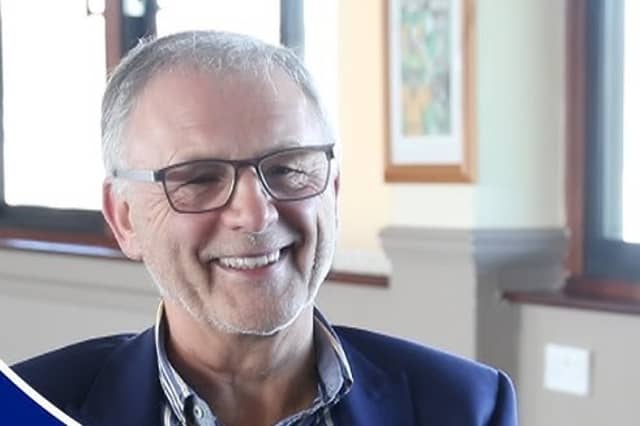

Former Torquay United owner Clarke Osborne has passed away
Clarke Osborne, whose ownership saw Torquay United within a penalty of returning to the Football League and down to the ignominy of administration, has died at the age of 74.
The Gulls were in a perilous position when Osborne bought the club from the supporter-board led by Dave Phillips through his company Gaming International in December 2016.
From the start, there seemed to be two agendas to his stewardship – United’s fortunes on the pitch and Osborne’s plan to build a new stadium with housing, hotel and retail outlets to help pay for it.
Osborne needed Plainmoor’s landlords Torbay Council to help realise the dream and, for several years, the pair did try to work together.
A site at Barton’s Nightingale Park was on and then off. An artist’s impression was released.
But the new-stadium project - he was far from the first United chairman to propose it – proved almost impossible to sell to United’s fanbase.
On the field Osborne and his Plainmoor chief executive George Edwards kept faith first with the manager they inherited, Kevin Nicholson, and then their first appointee Gary Owers in the face of poor results and relegation to the National League South.
It was when they turned to the experienced and proven Gary Johnson in the autumn of 2018, that things started to lift off.
Johnson inspired a goal-laden NLS Championship in 2019, a Covid-curtailed mid-table finish in 2020 and then a determined bid to regain EFL status in 2021.
It was cruel timing that such a major effort was made in the face of the Covid pandemic, in front of restricted crowds instead of the big gates which would have generated serious revenue.
It peaked, of course, at Ashton Gate, Bristol, on June 20, 2021 in one of the most dramatic NL Play-Off Finals in history against Hartlepool United.
Things were never quite the same, for Osborne or Johnson, after United’s agonising defeat on penalties.
Winning that final is always worth well over £1 million.
It was bad enough for the fans that Avon-based Osborne attended only a handful of matches during his seven years in charge and, when things started to decline on the pitch, the already-strained relationship between board and supporters deteriorated further.
It turned into a downward spiral, including relegation back to the NLS as repeated financial losses mounted into seven figures.
As long as the stadium project was a possibility, the show remained on the road.
But in February 2024 it all unravelled.
Osborne suddenly announced that he was standing down as chairman and was preparing to put United into administration. Johnson resigned immediately.
The rest is well-documented history.
Osborne, a devoted family man and father of two, was an accountant by trade.
He built an empire which included, at various times, Bristol Rovers’ old Eastville stadium, Milton Keynes Bowl, greyhound and/or speedway tracks at Poole, Reading and Swindon.
Most are now closed.
He also had profitable interests in several other areas, including fibre optics and residential developments.
Osborne’s time at Plainmoor was undeniably tempestuous, especially in the last few years, and he never seemed to come to terms with the public scrutiny and access that goes with running a club like Torquay United.
His legacy here will not be a glittering one.
But what might have been if that 2020-2021 season had been played in front of the packed crowds it deserved – and if that long afternoon at Ashton Gate had ended in promotion instead of defeat?