

A hopeful guide to unleashing nature’s power

MOORLANDER BOOK REVIEW
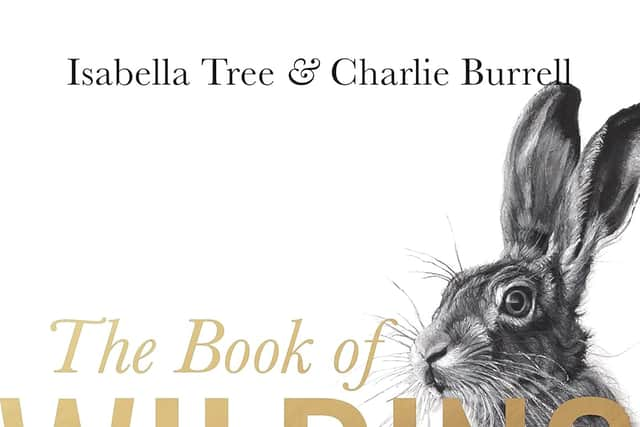
The Book of Wilding: A Practical Guide to Rewilding Big and Small
Isabella Tree and Charlie Burrell, Bloomsbury Publishing, £35
The recent film ‘Wilding’ was a deeply inspiring watch. I absolutely loved it; the evocative cinematography and sound design were utterly transporting. The film tells the true story of Isabella Tree and Charlie Burrell, a young couple who inherit a failing four-hundred-year-old estate in Sussex complete with a crumbling medieval Castle Keep and a rambling Gothic Revival mansion. After years of struggle, and faced with crippling debts, they decide to place the fate of their farm in the hands of nature, thus instigating what was to become one of the most famous rewilding experiments in Europe: Knepp.
Now aged 61, Isabella subsequently wrote a best-selling book about their courageous journey into the unknown, ‘Wilding: The Return of Nature to a British Farm’. It was one of the Smithsonian's top ten science books in 2018 and one of my personal all-time favourite reads. When the couple inherited the estate with its notoriously challenging heavy clay soil, the farm was already making heavy losses, despite government subsides. Charlie was then - in the words of Isabella - “in his early twenties, fresh out of agricultural college and full of ideas about new crop varieties, modern livestock breeds and the latest technology. He was convinced he could make a go of it. It took sixteen years and an overdraft of £1.5 million to make him realise the clay had won.”
Few of us have vast swathes of land, so Isabella Tree’s latest book - ‘The Book of Wilding’ offers a wealth of advice to anyone who would like to know more about how to rewild their own patch. Co-authored with her husband, Charlie Burrell, the book was inspired by the many requests Isabella received from people keen to rewild everything from unprofitable farms, landed estates and rivers, to ponds, allotments, churchyards, urban parks, gardens, window boxes and public spaces.
The Roman poet Horace said: “Drive nature out with a pitchfork and she'll come roaring back.” This is optimism. This is hope. Rewilding works fast. No matter how small your garden, the rewards are gloriously out of proportion for relatively small amounts of effort. Rewilding is not neglect, rather it is creating the conditions in which nature’s natural ebullience and power can thrive; it is giving nature a helping hand.
The book is a joy, a gorgeous large-format bible, absolutely jam-packed with thought-provoking information and highly practical advice. It is passionately argued from both the heart and the head with all facts duly referenced. Isabella writes with warmth, compassion, and gentle wit. She says: “You can’t simply close the farm gate, let the land go, and expect miracles to happen.” She also addresses issues of food production, as well as other common criticisms thrown at rewilding, for example that it excludes people from the landscape: “Rather, it opens up opportunities for employment and much greater public engagement with the natural world.” Employment figures at Knepp have risen from 23 full-time employees under farming to 50 under rewilding, and continues to rise every year. Who wouldn’t prefer working in the company of turtle doves and nightingales compared to a smog-ridden commute to a desk bound office job!
The chapter on urban rewilding is a revelation. The book explains how greening our cities creates jobs and builds communities, saving the tax-payer money in terms of public health, and reducing the need for air-conditioning. Rewilded river systems mitigate against flooding which causes millions of pounds of damage to infrastructure with every big storm.
Eight fascinating facts gleaned from ‘The Book of Wilding’
- Globally, we produce enough food for over 10 billion people, 2 billion more than the current world population. One third is wasted - 1.3 billion tonnes of edible food a year.
- If Europeans reduced their consumption of meat and dairy by just 15%, this would knock out entirely the need for imports of grain from Ukraine and Russia.
- The area of private gardens in the UK - over ten million acres - exceeds the combined area of all our nature reserves.
- There were 44 million more farmland birds in our skies in the 1960s than there are today.
- Around three million tons of pesticides enter the global environment every year, and it’s likely the world has lost 75% of its insects since 1970.
- Climate zones across Britain are moving north at a rate of 5 kilometres a year, hundreds of times faster than after the end of the last ice age.
- A fully grown sow can plough twenty hectares of land over a wet winter.
- A wilder, more resilient world is within our reach.