80th anniversary service at Corbyn Head remembers Home Guard tragedy

The service centred on the National Home Guard Memorial marks a tragedy which saw the deaths of six military personnel

Photos by MiraclePR

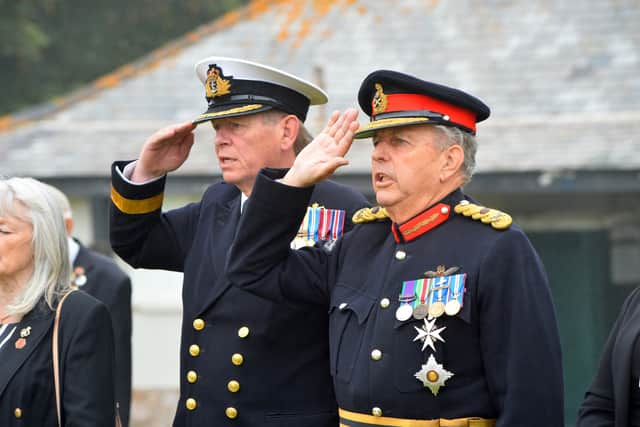
A special service of remembrance took place on Sunday 11th August at Corbyn Head centred on the National Home Guard Memorial. It marked the 80th anniversary of the tragedy which saw the deaths of six military personnel. Colonel Gerald Arnold, President of The Torquay Branch of The Royal British Legion officiated at the service and told Torbay Weekly of the story behind the event.
On the 11th of August 1944 at 6.00 o’clock in the evening, a coastal artillery piece exploded while being fired. It was being inspected at the time and had been firing for most of the day, dropping shells out into the bay but a shell exploded in the breach killing and injuring members of the Home Guard and Royal Artillery. We hold a service here on August 11th every year to mark this tragic event.’placeholder image
On the 11th of August 1944 at 6.00 o’clock in the evening, a coastal artillery piece exploded while being fired. It was being inspected at the time and had been firing for most of the day, dropping shells out into the bay but a shell exploded in the breach killing and injuring members of the Home Guard and Royal Artillery. We hold a service here on August 11th every year to mark this tragic event.’
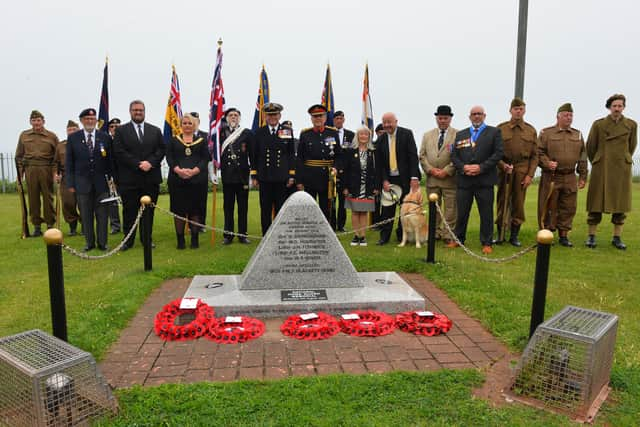
The memorial to those who died is the only one dedicated to The Home Guard and thus has become the National Memorial. The names of Frederick Blackett (Royal Artillery), Frederick Wellington, J Fishwick, George Buckingham, Wilfred Kinch and Walter Houghton sit among others who died defending the coastline of South Devon. Torquay was a military training area during World War Two, and thus suffered many German bombing raids, at least 23, which resulted in the deaths of over 150 people in the area, including three members of the Torquay Home Guard. Hundreds of buildings were totally destroyed, thousands more badly damaged. Various beaches on Devon’s south coast were assigned to Home Guard artillery batteries, whose duties were the protection of these beaches, and offering a last line of defence.placeholder image
The memorial to those who died is the only one dedicated to The Home Guard and thus has become the National Memorial. The names of Frederick Blackett (Royal Artillery), Frederick Wellington, J Fishwick, George Buckingham, Wilfred Kinch and Walter Houghton sit among others who died defending the coastline of South Devon. Torquay was a military training area during World War Two, and thus suffered many German bombing raids, at least 23, which resulted in the deaths of over 150 people in the area, including three members of the Torquay Home Guard. Hundreds of buildings were totally destroyed, thousands more badly damaged. Various beaches on Devon’s south coast were assigned to Home Guard artillery batteries, whose duties were the protection of these beaches, and offering a last line of defence.

Present on the day was Steve Darling MP who said ‘I see this as so important to mark the people who made the ultimate sacrifice in defending the realm. It is a stark reminder that the shadow of war fell over Great Britain … not that long ago and sadly it is not that far away in eastern Europe at the moment.’  
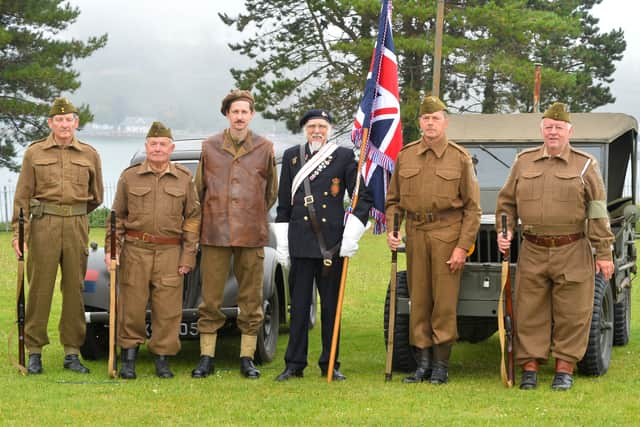
Councillor Hannah Stevens, Mayor of Torbay, The High Sheriff of Devon, Commordore Jake Moores, Lieutenant General Sir Andrew Ridgway, Deputy Lieutenant and past mayor Mark Spacagna laid wreaths at the service with the standards of The Royal British Legion dipping in salute to the fallen.placeholder image
Councillor Hannah Stevens, Mayor of Torbay, The High Sheriff of Devon, Commordore Jake Moores, Lieutenant General Sir Andrew Ridgway, Deputy Lieutenant and past mayor Mark Spacagna laid wreaths at the service with the standards of The Royal British Legion dipping in salute to the fallen.

The pyramid shaped granite stone, unveiled in August of 2005, now marks the 1206 members of The Home Guard who died during The Second World War throughout the country and not just the local victims of August 1944. Other members, who were killed during the German bombing have their names in place. Gunner C R Crocker died in the Barton Gas works in 1942; and two other members, Private Roe and Private Weeks perished at The Palace Hotel in the same year, the hotel at the time was being used as an RAF hospital and became a target for the Luftwaffe. 

Related topics:
Powered by
Register
Follow us
© 2026 Formpress Publishing LTD. All rights reserved.Cookie SettingsTerms and ConditionsPrivacy notice