Multi-award-winning comedian Romesh Ranganathan is coming to North Devon. Photo: Rory James / Licensed under CC BY 2.0
Search


28 Mar 2026

Please allow ads as they help fund our trusted local news content.
Kindly add us to your ad blocker whitelist.
If you want further access to Ireland's best local journalism, consider contributing and/or subscribing to our free daily Newsletter .
Support our mission and join our community now.
To continue reading this article, you can subscribe for as little as €0.50 per week which will also give you access to all of our premium content and archived articles!
Alternatively, you can pay €0.50 per article, capped at €1 per day.
Thank you for supporting Ireland's best local journalism!

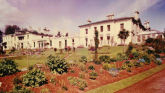
(Image courtesy: Robert Howlett, CC0, via Wikimedia Commons)
Isambard Kingdom Brunel was a significant figure in many areas not least in Paignton.
Responsible for the coming of the railway in 1859 his contribution to the subsequent development of the town cannot be overestimated. Prior to the railways arrival Paignton was a small inland agricultural village. The railway enabled the transformation to a seaside resort with many elegant buildings, some of which remain today.
The Palace Theatre is a perfect example. The mansions next to the Picture House in Torbay Road, built in 1904 and known as Queens Park Mansions, are another example. Sadly, as we all know , some were lost to the misguided, some might think criminal, modernisation of the 1960s. Dellars Café! Need I say more.
However, Brunel was much more than a railway pioneer. During his time in Paignton, he built four houses for his associates in Bishops place. These elegant houses were intended for the company doctor, the architect, the surveyor and for the procurer. They incorporated servants quarters and a stable and were built to a very high standard.
Still standing, a blue plaque confirming their history can be seen on the wall of the first property. This house remained a Doctors Surgery for many years and is now a dance studio. The others are now private residences converted into flats.
Brunel himself rented a villa in Stitchill Road Torquay while he was having a house built in Watcombe. Sadly he died before his house was completed, the house is now in private ownership. A blue plaque can be seen outside the property in Stitchill Road. He is also believed to have a connection with a house in Lower Polsham Road.
The arrival of the railway was greeted with great excitement by the local people and as a celebration it was decided to bake an enormous pudding. The Paignton pudding was originally produced to commemorate significant events. The first in 1295 to celebrate the granting of a market charter by King Edward 1st. However this pudding was much bigger and people were invited to come along and sample it.
Unfortunately, far more people than expected turned up, the five policeman guarding the pudding were soon overwhelmed and fights broke out. Most of the pudding was destroyed in the riot, trampled underfoot.
Amongst Brunel’s many achievements were bridges and viaducts. An example of his work can be seen in Broadsands where he designed the viaduct but did not live to see its completion. Possibly his most famous bridge was the Clifton Suspension Bridge in Bristol, a magnificent feat of engineering.
Brunel was the first person to consider the different expansion rate of steel and stone and in order to overcome this he pioneered the installation of slip joints which allowed for thermal movement between different types of material. It is believed these may be incorporated in the railway bridge at the bottom of Manor Road in Preston and also the one in Victoria Park. For some reason the bridge in Seaway Road is purely a concrete construction and therefore, did not need slip joints.
There is, of course, much more to Isambard Kingdom Brunel. Have a look at the Paignton Heritage Society’s newly redesigned website. Information concerning just about everything relating to Paignton can be found here, together with pictures and photographs. Details of upcoming events can also be found here together with much more.
The next event in the PHS calendar is the opening of Kirkham House on Good Friday and Easter Monday between 1pm and 4pm. Guided tours are available.
The house dates back to the late 14th century. English Heritage, who own the property, have recently commissioned a dendrochronology report on the timber within the building. Thought to be reclaimed ships timber therefore even older than the house, we await the results of the report with bated breath.
Our next meeting on April 15 features a talk on the restoration of the Picture House. Given by Iris Butler (acting chair) and Jane Sinclair (volunteer co-ordinator), this fully illustrated talk is not to be missed. Iris and Jane have been involved with this project from the beginning and have a wealth of knowledge. It starts at 7pm, with entry costing £5 (£4 for members of PHS).
Donations continue to be offered to our archive, for which we are extremely grateful. Recently a collection of photos and papers relating to the Marist Convent has been received. Yet to be catalogued, these will be another valuable addition to our collection. As an ex-Marist Convent pupil I am particularly looking forward to viewing them.
More details of these and other donations, together with details of forthcoming events, will follow in the next few weeks.

Subscribe or register today to discover more from DonegalLive.ie
Buy the e-paper of the Donegal Democrat, Donegal People's Press, Donegal Post and Inish Times here for instant access to Donegal's premier news titles.
Keep up with the latest news from Donegal with our daily newsletter featuring the most important stories of the day delivered to your inbox every evening at 5pm.