

Be safe if you go for a Christmas or New Year sea swim in North Devon, says RNLI

Sea swims have become popular in North Devon but the RNLI has warned anyone going for a cold dip this Christmas or New Year’s Day to remember safety precautions
Plunging into the sea on New Year’s Day or over Christmas has become a popular pastime in North Devon but festive dippers have been reminded to stay safe due to the very cold water at this time of year.
Ahead of the ‘festive swim season’ the RNLI has issued some sensible advice to ensure people have fun without putting themselves in danger.
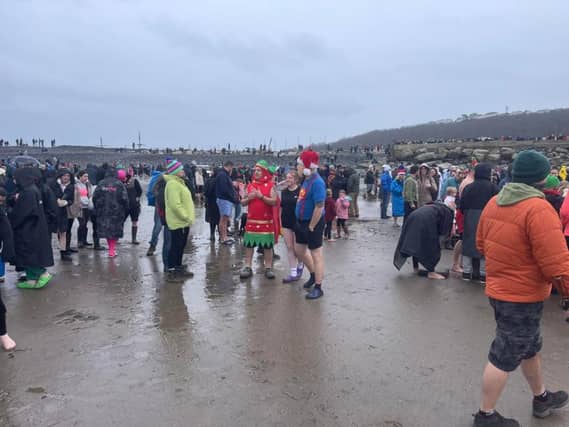
Westward Ho! has become particularly well known for its annual New Year’s Day Swim, when hundreds of swimmers and paddlers, most in fancy dress, brave the frigid waters, usually starting at 11.15am.

Above: Testing the waters for the annual New Year's Day swim at Westward Ho! Credit: Rob Braddick
Emmie Seward-Adams, RNLI water safety delivery manager, said while cold water dips have become popular around Christmas and New Year, with water temperatures in the UK around six to 10 degrees at this time of year, the risk of cold water shock is a concern, especially for those not acclimatised to the temperatures.
She said: “For those dipping in the sea, there are several precautions you can take to help ensure you have an enjoyable and safe time. Avoid swimming alone, consider going with others or joining a group or organised activity so you can look out for each other. Think about the depth of water and if you can, stay in your depth.
“Anything below 15C is defined as cold water. The effects of cold water, combined with weather conditions and any personal health issues should be taken seriously before venturing in. If it’s your first time in open water, we’d recommend you speak to your GP first, particularly for those with cardiac or under laying health conditions.
“Also taking the right kit is essential. We’d recommend wearing a bright swim cap to make yourself visible to others together with a tow float to use in an emergency, consider wearing a wetsuit to keep you warm and increase your buoyancy.
“Before swimming take a minute to let your body get used to the water. The initial effects of cold-water pass in less than a minute so don’t try to swim straight away.
“‘The most important thing to remember is if you are in any doubt, stay out of the water and if you or anyone else does get into trouble in or on the water please call 999 or 112 and ask for the coastguard.”
For more advice on open water swimming, visit https://rnli.org/safety