

Concerns raised over Devon carers service transfer to council
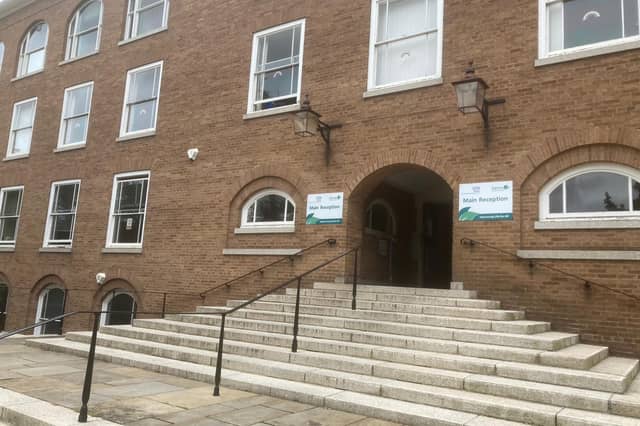

Concerns have been raised over plans to bring a service supporting thousands of unpaid carers in Devon under the direct control of Devon County Council.
The council is preparing to take responsibility for the Devon Carers service from October after procurement rules prevented it from extending its existing contract with Westbank Community Health and Care, the Devon-based charity currently providing the service.
Devon Carers is commissioned jointly by Devon County Council and NHS Devon to provide support, advice and assessments for unpaid carers across the county.
The planned transfer was discussed by the council's health and adult care scrutiny committee, where carers and councillors questioned how the change would affect the service and how its performance would be monitored.
Jo Earlham, a member of the public, told the committee about her own experience as an unpaid carer for her husband and raised concerns that financial considerations could take precedence over the needs of carers.
“My concern about this being taken in-house is that decisions will be driven by pounds and not people,” Jo said.
“Nationally, unpaid carers save the country around £184 billion a year, so what assurances can you give us that this transition will genuinely support carers, and relieve rather than add to the strain they already carry?”
Senior council officers described the change as a “lift and shift” process and said carers should not experience any deterioration in the service when responsibility moves to the authority.
They said the funding available would remain unchanged and stressed that the voluntary, community and social enterprise (VCSE) sector would continue to play a role, with organisations commissioned to provide support where appropriate.
That means Westbank could continue to provide some services, despite the council taking overall control of the provision.
Councillor Jess Bailey (Independent, Otter Valley), chair of the health and adult care scrutiny committee, said she was “concerned about the transition” and called for a report covering the first 100 days following the change.
She said this would allow councillors to see what had happened during the transition, identify lessons being learned and consider how the service could be improved.
The committee also heard calls for greater transparency over how the service's performance would be assessed once it was under council control.
Linda Hughes, who said she had been a carer for three relatives and now volunteers for NHS England to help unpaid carers access support, asked how carers would be able to see whether improvements were actually being delivered.
“I want to know how the council, working with partners, intends to visibly demonstrate sustained improvement, and how will I and other carers know that improvements have taken place,” she asked the committee.
Ms Hughes said transparent and regularly published performance measures would be important in allowing carers and the wider public to understand how the service was performing.
The discussion took place as the scrutiny committee considered the findings of a recent Care Quality Commission (CQC) assessment of Devon County Council's adult social care services.
The regulator rated the council's adult social care provision as “requires improvement” overall.
While the CQC found that people's experiences were shaped by “strong person-centred values and proactive engagement”, it also identified support for unpaid carers as an area “requiring sustained improvement.”
The report highlighted positive practice in the county, including timely carers' assessments, with 94 per cent completed within 28 days. However, it also found mixed views about the consistency and impact of support available to carers.
Councillor Richard Keeling (Liberal Democrat, Chudleigh & Teign Valley), cabinet member for adult services, described the CQC report as a “significant milestone in Devon’s improvement journey” as well as an “important opportunity to reflect on our progress and the work that remains ahead”.
He noted that the council had been only one percentage point away from receiving a ‘good’ rating from the regulator.
“We welcome the recognition by the CQC of the improvement in areas, and the positive feedback of partnership working, leadership, and the commitment to improve outcomes,” he said.
“It is reassuring that significant progress has been made and we have strong foundations in place for further improvement.”
Cllr Keeling acknowledged that the CQC findings also highlighted areas requiring further work, saying the council “accepts the findings and is committed to addressing them at pace”.