

Dartmoor Zoo joins pioneering project to bring extinct butterfly back to the UK
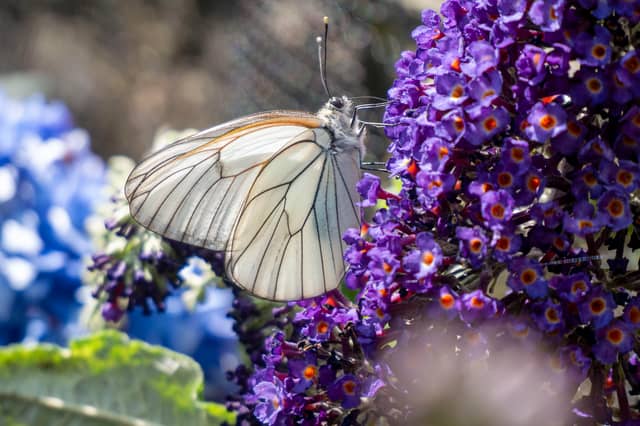

The species became extinct in the UK around 100 years ago
A Devon conservation project is aiming to bring a once-native butterfly species back to the UK, with Dartmoor Zoo playing a key role in an ambitious breeding and reintroduction programme.
The zoo has partnered with conservation organisation Ambios Ltd on a project to reintroduce the Black-Veined White Butterfly (Aporia crataegi), a species that became extinct in the UK around 100 years ago.
The initiative brings together a number of conservation partners, including Knepp Rewilding, Royal Holloway University and Butterfly Conservation, with the aim of establishing a sustainable population of the butterfly once again in the British countryside.
Dartmoor Zoo’s role is to provide a safe breeding site for the butterflies, supporting the early stages of the rearing process. The first females arrived at the zoo on Tuesday 23 June, and within just 10 minutes of arriving, one butterfly had already laid a batch of eggs on the hawthorn plants within its habitat.
The species name Aporia crataegi translates as “of the hawthorn”, reflecting the butterfly’s close relationship with the plant, which provides a vital food source for its larvae.
Under the programme, impregnated female butterflies are collected in Normandy each summer and imported under a Natural England licence before being placed into a specialist rearing habitat.
The females lay eggs which hatch later in the summer, with the young larvae remaining small and semi-dormant on hawthorn plants over winter. The following spring, they enter a period of rapid growth before pupating and emerging as adult butterflies.
Some of these adults will eventually be released at a designated site in East Devon, again under licence, with the process repeated to maintain genetic diversity and help the species establish itself in the UK once more.
Dartmoor Zoo CEO David Gibson said the project showed the importance of protecting all wildlife, not just larger endangered species.
“Whilst Dartmoor Zoo is probably better known for conservation breeding of Threatened big cats such as Carpathian Lynx and Amur Leopard, we also know it is just as important to look after the smaller animals. The Black-Veined White Butterfly is an ideal example of how we can all help to conserve UK wildlife.
“When we were approached by Ambios Ltd to partner with them, Knepp Rewilding and Royal Holloway University in the captive breeding and release of Black Veined White Butterflies, we were delighted to help.
“This enigmatic species should still be fluttering around the hedgerows of Devon and as recently as 100 years ago they were part of our native biodiversity. Now this exciting breeding and reintroduction project will result in the beautiful and enigmatic butterflies being released into East Devon as soon as next summer.”
The Black-Veined White Butterfly was once widespread across much of the UK, but changes to farming practices after the First World War are thought to have contributed to its decline and eventual disappearance.
Increased agricultural intensification, greater pesticide use and the removal of traditional hedgerows are among the factors believed to have played a role in the species’ extinction.
With adult butterflies typically only dispersing around three to five miles, the species would be highly unlikely to naturally recolonise the UK from mainland Europe without conservation intervention.
Ambios Ltd Director Simon Roper said the project was a natural fit with the organisation’s wider work supporting nature recovery and training future conservation professionals.
“The Black-Veined White Butterfly reintroduction project is a perfect fit for our non-profit organisation. It provides a practical real-world example which we can tell as part of our nature recovery training programmes. Working with Dartmoor Zoo and a network of organisations across the UK, we all intend to see this iconic, once native, species thriving in the hedgerows of Devon over the years to come.
“As an organisation we are completely committed to nature recovery. Our work on the Sharpham Estate focuses on improving the skills of people who want to find jobs working with nature and species reintroduction. We’ve been training the next generation of wildlife professionals for the last 25-years.”
Dartmoor Zoo is now encouraging the public to support conservation work through donations or by purchasing a “Name a Butterfly” pack, which includes a personalised certificate, wildflower seeds, a butterfly print and a reusable shopping bag.
Although visitors can view the butterfly habitat at the zoo, there is no way to identify an individual named butterfly.
To find out more about Dartmoor Zoo and its conservation work, visit www.dartmoorzoo.org.uk.