

Devon anti-social behaviour falls by 10 per cent as police reveal major crackdown
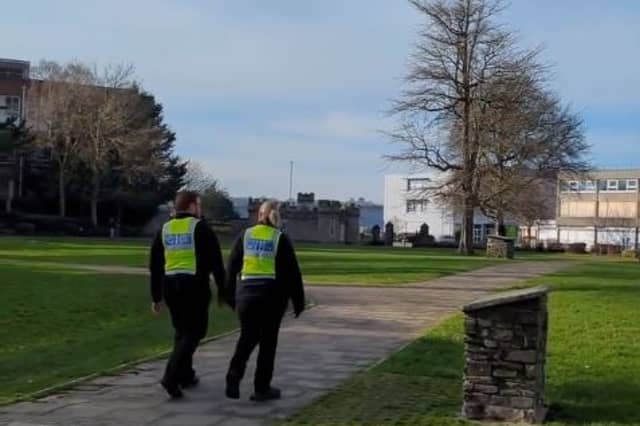

New figures show reported anti-social behaviour across Devon and Cornwall has fallen by more than 10 per cent, but concerns remain in several towns as funding questions hang over successful crime prevention schemes
The number of anti-social behaviour (ASB) incidents reported to Devon and Cornwall Police has dropped by 10 per cent over the past 12 months.
Police and Crime Commissioner Alison Hernandez says "significant efforts" are being made to tackle ASB.
A number of town councils, including Ilfracombe, Exmouth and Brixham, have written to the commissioner expressing concern over persistent anti-social behaviour.
In a report to the Devon and Cornwall Police and Crime Panel last Friday, she highlighted the use of legal powers such as Community Protection Warnings (CPWs) and Community Protection Notices (CPNs), which she said were sending "a clear message that communities should not have to tolerate persistent anti-social behaviour".
Over the past year, targeted interventions have included 31 closure orders, youth civil injunctions, prosecutions for injunction breaches, and more than 40 CPWs and CPNs.
In the 12 months to May 2026, there was a 10.2 per cent reduction in ASB incidents reported to Devon and Cornwall Police, falling from 26,695 incidents to 23,969.
Targeted hotspot policing patrols in 15 locations, Street Focus initiatives and community safety partnerships have been used to tackle ASB in towns and city centres.
'Hotspot policing' was supported with £2 million of Home Office funding between 2024 and 2026, along with a further £300,000 from the commissioner's office. However, the funding ended in April, with hotspot policing now incorporated into "business as usual".
The funding also "propped up" the successful street marshals scheme.
Concerns were raised by members of the Police and Crime Panel over where future funding for the initiative, which supports police in deterring low-level crime and anti-social behaviour, would come from.
Street marshals have enforcement and limited policing powers. They provide a uniformed presence but are not police officers. They have been particularly effective in places such as Barnstaple, where ASB has dropped by a third and fear of crime has reduced, leading to greater footfall in the town.
Ms Hernandez's office has funded the scheme until the end of the summer with £150,000 for 15 towns and cities to help meet the increased demand created by tourism.
She warned that the funding would end in September and urged the panel, made up of councillors from Devon and Cornwall, to champion the initiative with central government.
Cllr Caroline Leaver (Liberal Democrat, North Devon Council, Newport) said North Devon Council had recently funded street marshals in Barnstaple and Ilfracombe, but everyone was "short of money" and it was important that the scheme continued.
North Devon Council has set aside £275,000 from its surplus in 2025/26 to fund the street marshal scheme in future years.
Members also heard about the work of Cornwall's tri-service officers, who support communities by tackling issues such as anti-social behaviour and crime prevention, while also responding to 999 calls as firefighters on behalf of the fire service and as community first responders for the ambulance service.
The initiative is being extended into Devon, with the aim of eventually having one based at every fire station across the two counties.
Ms Hernandez said schemes such as tri-service officers and street marshals help support the police in tackling ASB.
"Anti-social behaviour can make people feel unsafe in their own communities, prevent them from enjoying public spaces and have a damaging effect on town centres, neighbourhoods and rural areas," she said.
"While Devon and Cornwall remains one of the safest places in the country, I know from speaking to councils, businesses and residents that anti-social behaviour continues to be one of the issues people are most concerned about.
"Every incident affects real people. Whether it is persistent street disorder, nuisance neighbours, intimidating behaviour, dangerous driving or rural anti-social behaviour, the impact on victims can be significant.
"My priority is to ensure communities feel safer, supported and listened to, and that every available tool is used to create safer, stronger and more confident communities across Devon, Cornwall and the Isles of Scilly."
Alongside enforcement activity, the commissioner said she was "investing heavily" in prevention and early intervention.
This includes funding a dedicated youth ASB assertive outreach service, which works directly with young people who may be at risk of becoming involved in anti-social behaviour or criminality. Since launching in 2022, the service has delivered more than 1,700 sessions and supported more than 2,100 children and young people, with 82 per cent achieving a positive outcome.
Additional support is provided through community mediation services, restorative justice programmes and Neighbourhood Watch schemes.
In a letter to the commissioner in May, Ilfracombe Town Council said rising levels of shoplifting, abusive language, street fighting and vandalism in the town were becoming intolerable, and appealed for additional police resources to help the community, where some businesses have closed because of crime.
Ms Hernandez has encouraged people to continue reporting every incident of anti-social behaviour.