

Fingle Woods: an autumn treasure on the edge of Dartmoor
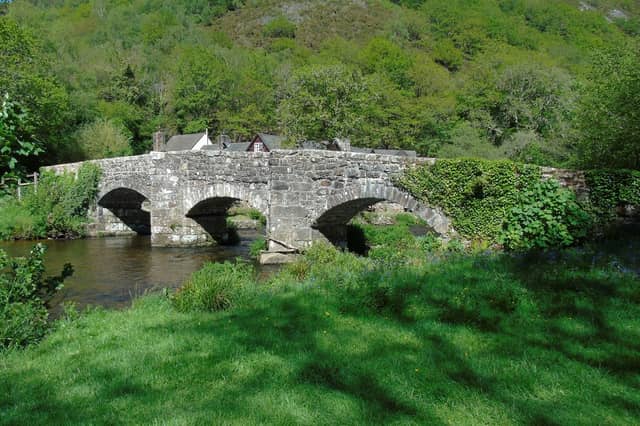

As the first signs of autumn begin to appear across Dartmoor, there are few better places to experience the changing season than Fingle Woods in the Teign Valley.
The ancient woodland has been named among the UK's top five autumn nature experiences by glamping experts Glampingstays, in a list celebrating some of Britain's most memorable places to connect with nature.
For Devon, the recognition is a fitting tribute to a remarkable landscape which combines ancient woodland, the River Teign, wildlife-rich wet woodland, dramatic valley slopes and thousands of years of human history.
Fingle Woods stretches along around 10 kilometres of the Teign Valley on the northern fringes of Dartmoor National Park. The woodland is made up of eight different woods and covers hundreds of hectares, with a mixture of ancient broadleaf woodland, conifer plantations, grassland, heathland, moorland and wet woodland.
It is also a woodland undergoing a remarkable transformation. The Woodland Trust and National Trust bought Fingle Woods in 2013 with the aim of restoring its ancient woodland habitats and making the landscape more accessible to people.
For much of the 20th century, areas of the ancient woodland were planted with non-native conifers for timber production. The restoration project is gradually reversing that process, allowing native woodland to recover.
It is a task on an extraordinary scale. The National Trust describes the restoration as one of the largest woodland restoration projects in the country and estimates that it will take more than 200 years.
The work is not simply about removing trees. Ancient woodland can contain surviving remnants of the original ecosystem beneath plantations, and restoration aims to gradually bring back the light levels, plants and habitats associated with native woodland.
Fingle is particularly significant because ancient woodland now covers only a small proportion of the UK's land. The Woodland Trust estimates that ancient woodland accounts for just 2.5 per cent of the UK, making surviving sites and their restoration increasingly important.
There is evidence of human occupation at Fingle dating back around 3,000 years. High above the woodland stands Wooston Castle, an Iron Age hillfort offering extensive views across the Teign Valley and Fingle Woods.
Later generations also left their mark. During the 16th century, charcoal production became an important industry in the woods, providing fuel for local leather tanning, smelting and weaving. The legacy of that industry can still be found in the woodland, with charcoal hearths surviving alongside old wood banks, veteran boundary trees and other archaeological features. The medieval Fingle Packhorse Bridge is another reminder of the area's past, while the River Teign was once home to several mills.
Fingle is therefore much more than a collection of trees. Its paths and landscape tell the story of centuries of woodland management, industry, farming and settlement.
Today, the woods support a rich variety of habitats and wildlife. The river and areas of wet woodland provide conditions for specialist plants, insects and amphibians, while woodland birds include redstarts, wood warblers and pied flycatchers.
Kingfishers can sometimes be seen along the river, while otters and other wildlife use the waterways and surrounding woodland. Deer are among the larger mammals found in the woods, alongside an abundance of smaller creatures and woodland invertebrates. Wild daffodils appear in spring, followed by bluebells, while autumn transforms the woodland floor and canopy as deciduous trees begin to turn.
The combination of the River Teign, steep wooded slopes and changing foliage makes the Fingle Bridge area particularly atmospheric at this time of year.
There is also a wider environmental story behind the restoration. Fingle's position within the Teign catchment means that what happens in the woodland is connected to the health of the river. Restoration work has included measures to improve water flows, while timber from conifer restoration has been used in projects designed to help restore habitats higher on Dartmoor.
One of the biggest changes brought about by the National Trust and Woodland Trust partnership has been improved public access. For many years, large parts of Fingle Woods were inaccessible to the public. Today, around 45 kilometres of trails provide opportunities to explore the woodland and its surrounding landscape.
One popular route follows the River Teign from Fingle Bridge through the gorge woodland, while walkers can also make their way towards Wooston Castle. For those looking for a longer adventure, Fingle connects with the wider network of paths around the eastern edge of Dartmoor and towards Castle Drogo. And of course, a visit to the Fingle Bridge Inn and their cosy fire is a must for those walking through the crisp autumn air.
Fingle Woods features in Glampingstays' list alongside Haughmond Hill and Eastridge Woods in Shropshire, Benmore Botanic Garden in Argyll, Kingley Vale in West Sussex and Bwlch Nant yr Arian in Ceredigion.
The company says research found that more than a quarter of UK holidaymakers regard a deep connection with nature as their number one travel priority, while 70 per cent of people would like to see more of the UK.
Glampingstays Senior Marketing Manager Ellen Sanders said: "Autumn is one of the most rewarding times to explore the UK's natural landscapes, and glamping gives you a way to really immerse yourself in that.
"While the cooler months might not be the time most people want to pack a tent and pitch up at a campsite, glamping offers all the comfort and cosiness needed to enjoy the season outdoors, from proper beds and soft linen to wood burners and warm, welcoming interiors. Being based somewhere unique - a shepherd's hut on the moor, a cabin in the trees - makes the whole experience feel that much more connected. We put this list together because some of the most memorable places in Britain are also the quietest, and we hope people feel connected to nature as a result of visiting one of these stunning locations this autumn."
For Devon visitors, however, Fingle offers something that cannot be replicated by simply booking a woodland-themed break: the opportunity to walk through a living landscape whose story stretches from the Iron Age to the present day, while witnessing one of Britain's largest ancient woodland restoration projects taking place around them. And autumn may be one of the best times to do it.