

Ice Age discovery reveals possible ancient link to Dartmoor’s hill ponies
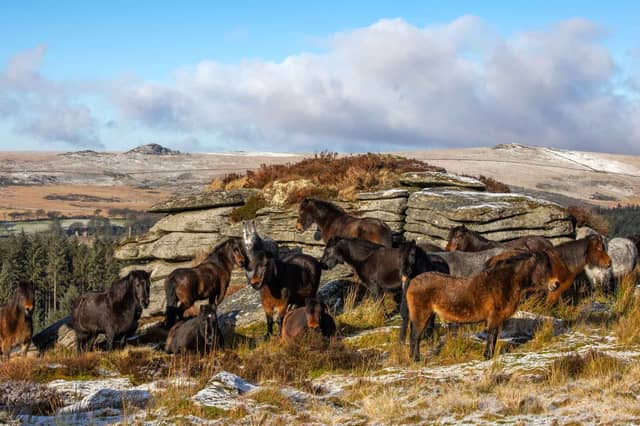

A 12,500-year-old horse tooth found in a Torquay cave could provide new evidence of the ancient ancestry of Dartmoor’s hill ponies, strengthening the case for protecting the distinctive animals.
The discovery at Kents Cavern comes just months after a national campaign to secure the future of Dartmoor’s semi-wild ponies attracted more than 200,000 petition signatures and prompted Government intervention to protect the population.
Scientists are now comparing genetic information recovered from the prehistoric tooth with DNA from modern Dartmoor Hill Ponies. Early analysis suggests the animals may share rare genetic variations inherited from horses that roamed Britain towards the end of the last Ice Age.
The findings are preliminary and have not yet been peer reviewed, with further genetic sequencing and comparisons needed to establish the relationship. However, researchers say the emerging evidence adds to the importance of preserving the native pony population.
The tooth belonged to a horse living in South Devon around 12,500 years ago, when the landscape was dominated by open grassland and hardy vegetation. Horses shared the area with wolves, lynx, bears, giant deer and aurochs, as well as prehistoric people.
It was recovered from the “Black Band” at Kents Cavern, a layer of charcoal deposits from human-made fires preserved beneath stalagmite. Evidence associated with the remains indicates that the horse was butchered by people living in the area.
Genetic comparisons are also being made with late-Pleistocene pony remains from Igue du Gral in south-west France. Similar genetic signals have been identified in Ice Age pony remains from France and among a small population of semi-wild upland ponies in Wales.
The Dartmoor Hill Pony is currently the only native English pony known to possess these particular genetic variations.
Previous research has already established that the Dartmoor Hill Pony has a distinctive genetic make-up. An international study published in the journal Science in 2023 used the ponies as a reference population when investigating British horse ancestry, following earlier research identifying a distinctive component within their genetic profile.
Charlotte Faulkner, chairman of Friends of the Dartmoor Hill Pony, said the discovery offered a remarkable new perspective on the animals and the generations of farmers who have continued to keep them on the Moor.
“For generations, Dartmoor’s hill farmers have kept these ponies because they belong on the Moor. We are now beginning to discover that, in doing so, they may also have preserved something much older. To think that a pony was living in what is now Torquay 12,500 years ago, that one of its teeth survived, and that modern science can now compare its genetics with ponies still living freely on Dartmoor is extraordinary.
“Only a few months ago we were fighting to make sure these ponies continued to have a future on Dartmoor. Now we are beginning to understand much more about the animals we fought to save.”
In July 2026, the Government announced that Dartmoor ponies would be removed from stocking-rate calculations in new environmental land-management agreements and committed to maintaining pony populations at least at current levels. The announcement followed widespread concern about the future of the ponies, which are an established part of Dartmoor’s landscape, farming traditions and ecology.
The discovery and developing genetic research will feature in a new exhibition at Torquay Museum, opening to the public on Saturday, October 24.
From the Ice Age to the Present Day will bring together archaeology, genetics and the history of pony keeping on Dartmoor, tracing the story from prehistoric horses living alongside early people to the semi-wild herds still roaming the Moor.
Clare Howe, collections and operations manager at Torquay Museum, said the museum’s archaeological collections continued to provide opportunities for new discoveries.
“The collections from Kents Cavern provide extraordinary insight into the environment of Ice Age Devon. This exhibition will not only tell the story of the Dartmoor Hill Pony but will link them to their ice age ancestors, something that is only possible due to continued research on this designated collection.
“Advances in science since the original excavations regularly uncover more of the ice age story that without museum collections such as ours would be lost.”
The exhibition will highlight how modern scientific techniques can reveal new information from archaeological finds recovered generations ago, helping researchers build a clearer picture of Devon’s prehistoric environment and the animals that inhabited it.
For Dartmoor’s hill ponies, the research could ultimately provide further evidence of their distinctive place in Britain’s equine history, as conservationists continue to campaign for their future on the Moor.
Exhibition details
- What: From the Ice Age to the Present Day, featuring the Kents Cavern horse tooth and the developing genetic story of Dartmoor Hill Ponies.
- Where: Torquay Museum.
- Public opening: Saturday, October 24, 2026.