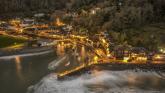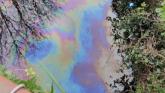
A substance, believed by onlookers to be fuel, spotted in the Tavistock Canal (Picture: Liz Hunt)
Search


02 Apr 2026

Please allow ads as they help fund our trusted local news content.
Kindly add us to your ad blocker whitelist.
If you want further access to Ireland's best local journalism, consider contributing and/or subscribing to our free daily Newsletter .
Support our mission and join our community now.
To continue reading this article, you can subscribe for as little as €0.50 per week which will also give you access to all of our premium content and archived articles!
Alternatively, you can pay €0.50 per article, capped at €1 per day.
Thank you for supporting Ireland's best local journalism!

Scorhill Stone Circle on Dartmoor is believed to date back more than 4,000 years and has been highlighted as a Winter Solstice destination. © Copyright Mark Percy

A remote Bronze Age stone circle on Dartmoor has been named among the UK’s best hidden locations to visit during the Winter Solstice.
Scorhill Stone Circle, thought to date back more than 4,000 years, has been highlighted for offering a quieter and less managed alternative to sites such as Stonehenge.
The study was conducted by Verdant Parks, a UK holiday park operator.
The circle, located on open moorland near Gidleigh, is considered by historians and archaeologists to have been a significant ceremonial and ritual site during the Bronze Age, between around 2000 and 700 BC.
While its precise purpose remains debated, many experts believe Scorhill functioned as a communal gathering place, used for ceremonies, feasting or sacred rites by local communities. Some have likened its role to that of a central meeting place within prehistoric society.
The monument forms part of a wider ritual landscape on Dartmoor, surrounded by cairns, stone rows and nearby settlements, including Shovel Down. This has led researchers to suggest it was integrated into a complex system of religious and social practices.
Archaeological studies have also identified evidence that large fires were once lit at the centre of the stone circle, although whether these were linked to funerary rituals, seasonal ceremonies or communal feasts is not known.
Scorhill has also been associated with archaeo-astronomy. One theory suggests that from the centre of the circle, the sun sets directly over the tip of its tallest stone on Midsummer Eve. Some experts believe such alignments indicate the site may have been used to observe solar and lunar cycles, helping Bronze Age communities mark seasonal changes.
During the Winter Solstice, when the sun reaches its lowest arc in the sky, visitors often arrive independently at dawn, seeking a more solitary experience than that offered at heavily managed heritage sites.
Unlike Stonehenge, there are no official events at Scorhill, with people instead gathering informally for personal reflection in the landscape, which can be transformed by frost, snow or early morning mist during winter months.
Dartmoor National Park Authority has previously advised visitors to take care when visiting remote locations in winter, urging people to check weather conditions and wear suitable clothing.
The Winter Solstice takes place on 21 December, marking the shortest day and longest night of the year in the northern hemisphere.

Subscribe or register today to discover more from DonegalLive.ie
Buy the e-paper of the Donegal Democrat, Donegal People's Press, Donegal Post and Inish Times here for instant access to Donegal's premier news titles.
Keep up with the latest news from Donegal with our daily newsletter featuring the most important stories of the day delivered to your inbox every evening at 5pm.