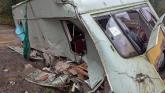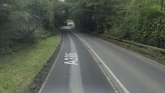
Drivers diverted as delays build between Grenofen and Horrabridge (Image: Google Maps)
Search


17 Mar 2026

Please allow ads as they help fund our trusted local news content.
Kindly add us to your ad blocker whitelist.
If you want further access to Ireland's best local journalism, consider contributing and/or subscribing to our free daily Newsletter .
Support our mission and join our community now.
To continue reading this article, you can subscribe for as little as €0.50 per week which will also give you access to all of our premium content and archived articles!
Alternatively, you can pay €0.50 per article, capped at €1 per day.
Thank you for supporting Ireland's best local journalism!

Budget-setting season brings difficult choices for Dartmoor, South Hams and moorland communities facing uncertain future responsibilities (© Copyright Lewis Clarke)
Everyone starts to pay a bit more attention when they realise the decisions councils are making might hit them in the pocket.
And that’s why more people across Dartmoor and its surrounding towns may be tuning into what’s happening in their local town halls right now, as it’s budget-setting time.
READ NEXT: ALERT: Storm Chandra to batter UK with flooding risk to Dartmoor
Honiton Town Council has already captured headlines by proposing a 49.9 per cent hike in its share, or precept, to use the formal term, of the council tax bill.
The council has outlined clear reasons why it wants to progress with such a big increase, including preparing for the major shake-up about to hit Devon’s local government and a need to bolster its reserves, but it has prompted the resignation of the now former councillor Joanne Fotheringham.
Interestingly, Honiton might not be alone, as there are some other town and parish councils in and around Dartmoor eyeing significant hikes too.
Number crunching
While the idea of reams of spreadsheets chock-full of numbers might make many want to glaze over, now is a vital time in the council calendar because finance officers are trying to work out how much money they need for the year ahead.
To meet often rising costs, councils need to raise more money, and one of the few proverbial levers they can pull is council tax, which is paid by homeowners and represents a significant source of town hall income.
Town and parish councils, including those serving Dartmoor communities and nearby market towns, don’t have formal limits on how much they can increase their precept by, but are encouraged to provide justification where large hikes are proposed.
The other precepts that combine to make up the council tax bill come from Devon County Council (for Devon residents outside Plymouth and Torbay), a district council such as South Hams or Teignbridge, the Devon & Cornwall Police and Crime Commissioner, and the Devon and Somerset Fire & Rescue Service.
Those other precepting bodies are subject to limits on how much they can increase council tax by each year.
READ NEXT: New role launched to support volunteering in West Devon’s rural communities
The precepts are added together to create a total, which is billed to residents based on the council tax band their property sits in.
But big spikes in precepts are being witnessed in a growing number of parish councils, including some serving Dartmoor-edge and rural communities, many of which are fearful about what extra responsibilities they might soon have to take on.
Uncertain future
That concern comes from the ongoing process of local government reorganisation, or LGR for short.
This is the biggest shake-up of local councils in 50 years and is likely to leave Devon with just three large councils compared to its current 11.
For communities in and around Dartmoor, there are worries that those new, larger councils will either want to jettison certain responsibilities or simply won’t have the time or capacity to consider them.
In such a scenario, the fear goes, the smallest councils on the local democracy rung, parishes and towns, will have to pick up the slack.
And to do that, they need money.
“All parish and town councils are aware of the LGR spectre, and the Somerset examples where many town services, like theatres and parks, were offered to town councils, so the smaller parishes may be considering such things, as well as others such as grass cutting or public toilet maintenance,” said Councillor Steve Keable (Liberal Democrat, Creedy, Taw and Mid Exe), a member of both Devon County Council and Mid Devon District Council.
“Consequently, active parish and town councils are mindful of LGR happening in just over two years and are preparing their budgets for managing the yet-unknown impacts and to avoid major one-off council tax hikes in a couple of years.
READ NEXT: 3,000-year-old Bronze Age urn makes remarkable return to Newton Abbot
“LGR will not save money, it will shift the focus of who pays. Unlike district and county councils, which have a legal limit on raising council tax, parish and town councils are not capped.”
While the parish or town precept is unlikely to be the largest portion of any Devon resident’s council tax bill, increases in it nevertheless make a difference, particularly in smaller Dartmoor and rural communities.
Complex picture
There are hundreds of parishes in Devon alone, many of them covering Dartmoor villages and surrounding countryside, making it difficult to discern an average rise or identify clear trends.
But a random sample suggests the direction of parish and town precepts is definitely upwards.
In the South Hams, Totnes is weighing a 7.5 per cent or 10 per cent rise, while Dartmouth’s precept rose by 11 per cent this year.
In Ivybridge, a key gateway to southern Dartmoor, the precept looks set to rise by nearly 12 per cent, while Okehampton, on the northern edge of the moor, is essentially flat with a 53p drop per year for a Band D home.
Elsewhere on the moor’s fringes, Bovey Tracey is heading for a roughly 31 per cent hike in its total precept, which the town council has described as an extra 62p per week for a Band D home “to help cover unavoidable costs so the town council can stay in good shape for the future”.
A raft of other Dartmoor, South Hams and Teignbridge town halls will be deciding their precept rises soon.
But some context is vital.
Percentage rises can be distorting, particularly in smaller Dartmoor communities, where fewer households are available to absorb rising costs.
Parishes and towns, by their nature, contain fewer residents than larger authorities, meaning increases can be felt more sharply in rural and moorland areas.
With LGR on the horizon, many local councillors fear that imbalance could worsen.

Subscribe or register today to discover more from DonegalLive.ie
Buy the e-paper of the Donegal Democrat, Donegal People's Press, Donegal Post and Inish Times here for instant access to Donegal's premier news titles.
Keep up with the latest news from Donegal with our daily newsletter featuring the most important stories of the day delivered to your inbox every evening at 5pm.