

Campaigners respond as Dartmoor could lose ‘up to 90 per cent of its hill ponies’
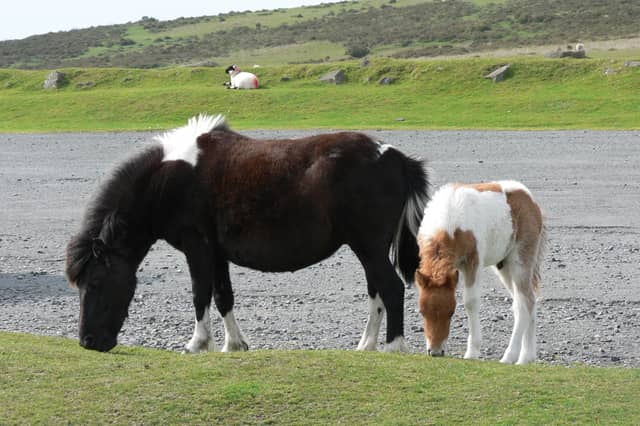

Friends of the Dartmoor Hill Pony say updated grazing contracts linked to ELM and Countryside Stewardship schemes could lead to major reductions in semi-wild pony populations, prompting calls for a separate management system and protected status
Campaigners and pony organisations have reached out to The Moorlander to issue responses and raise new concerns following previous reporting on National England’s comments on a petition regarding pony extinction fears.
Friends of the Dartmoor Hill Pony say new grazing arrangements under Environmental Land Management (ELM) and Countryside Stewardship schemes could lead Dartmoor to ‘lose up to 90 per cent of its Hill Ponies, the last semi-wild pony herds left in England’
In a detailed response, chair Charlotte Faulkner told The Moorlander that the changes could result in a major decline in herd sizes.
She said: "Thanks to new contracts drawn up by Natural England that require livestock numbers allowed to graze to be significantly reduced… ponies will end up competing with cattle and sheep for limited grazing ‘space’ under the new scheme.
“Commoners will be forced to remove ponies to maximise the number of more commercially viable animals that they will be allowed to graze.”
The group estimates that Dartmoor Hill Pony numbers could fall by between 67 per cent and 92 per cent under the Countryside Stewardship contracts, even with ‘supplements aimed at supporting ponies that would only come into play after the reductions have taken place’.
It is calling for ponies to be managed separately from other livestock, with a fixed moor-wide population agreed outside of grazing calculations, “as was in place with previous contracts”.
“We are asking that Dartmoor Hill Ponies are afforded protected status, so that the continued existence of a thriving population on the Moor is guaranteed into the future,” Ms Faulkner added.
The charity also said monitoring of pony numbers should take place immediately, rather than after any irreversible reductions occur.
In a previous article, “Natural England responds to petition over Dartmoor pony extinction fears”, Natural England said it “fully recognises the key role that semi-wild Dartmoor ponies play in the sustainable management of Dartmoor” and is working with partners through the Dartmoor Land Use Management Group on grazing policy.
Joss Hibbs, secretary of the Dartmoor Hill Pony Association, reached out to The Moorlander to question this reference attributed to Natural England suggesting it is “working with partners, including the Dartmoor Hill Pony Association” on grazing management.
Hibbs said the Association is ‘not aware’ of an invitation of this kind and ‘would like to follow it up’.
“We welcome the opportunity to meet with Natural England to discuss concerns and solutions to safeguard the future of Dartmoor's semi-wild pony herds,” Hibbs added.
The Association also said it supports setting out its proposed approach to safeguarding semi-wild Dartmoor pony herds and has called for further discussion on long-term grazing arrangements.
The Dartmoor Pony Heritage Trust (DPHT), which works primarily with pedigree Dartmoor ponies, said ponies have an important ecological role but stressed that grazing systems on Dartmoor are complex and vary across commons.