

On this day in history: Moretonhampstead receives first French prisoner of war

Moretonhampstead made history as it welcomed its first French prisoner of war on parole.
On January 23, 1807, Moretonhampstead made history as it welcomed its first French prisoner of war on parole.
Prisoners taken by British forces, and soon after their allies, during the war against Napoleon Bonaparte (1803-1814) were first held in old ships at Plymouth and various other ports.
However, the officers were paroled and sent to various centres around the country, where the prisoners enjoyed relative comfort, but were not supposed to leave the area in which they were held.
Designated as a parole town earlier that month, the town's arrangements for the prisoners were overseen by Mr. John Ponsford, surgeon and Captain of the Volunteers.
The initial group of prisoners included French and Spanish individuals, later joined by Dutch and Danish captives, many of whom hailed from the French navy and were captured in the West Indies.
Among the prisoners who left a lasting impact on Moretonhampstead was General Rochambeau, whose West Indian servant, Pierre Courpon (known as Peter the Black), married a local girl, contributing to the establishment of families in the town.
While most prisoners abided by the parole restrictions, a few unfortunate souls passed away during their time in Moretonhampstead. Three French officers, including Louis Quintain, Lieutenant of Marine Artillery, found their final resting place in the town. Quintain's funeral, held with Masonic honours, drew significant attendance from both foreign officers and local inhabitants.
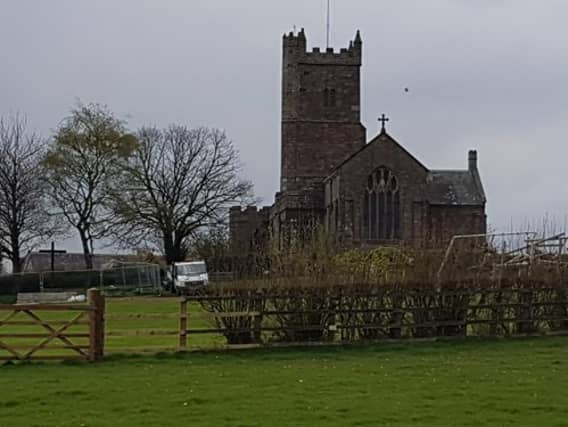
These historical events are commemorated by memorial stones, with two preserved in the church porch, bearing witness to the unique chapter in Moretonhampstead's past during the Napoleonic Wars.
The town's role as a parole centre left an indelible mark, intertwining the lives of prisoners of war and the local community in the early 19th century.