

Plymouth firms put uncrewed vessels to the test in major naval exercise

Technology developed by Plymouth marine companies has been tested alongside international forces in Portugal, highlighting the city's growing role in marine autonomy
Plymouth-built maritime technology has been put to the test alongside naval forces from around the world during a major international exercise in Portugal.
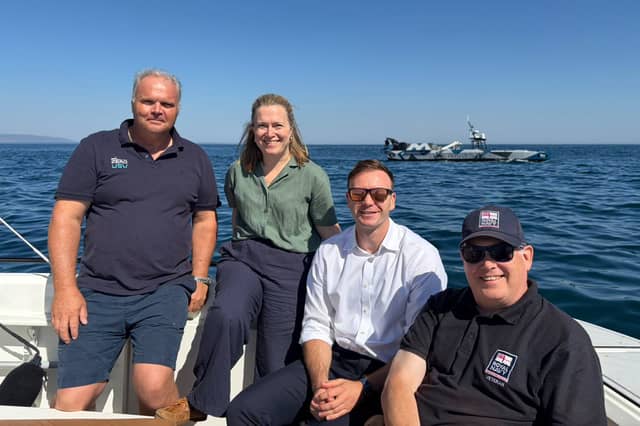
Representatives from the city visited the REPMUS exercise off the Tróia peninsula earlier this month, where uncrewed maritime systems were tested in live conditions at sea.
Among the Plymouth technology taking part was a 17-metre uncrewed surface vessel from ZeroUSV, based at Turnchapel Wharf.
Robotic sailing vessels from fellow Turnchapel company Oshen also took part, while STARK demonstrated uncrewed vessels.
The exercise brings together military, industry and academic organisations to test and develop uncrewed systems for maritime operations.
Portuguese Navy information says this year's exercise involved more than 1,500 people from 36 navies, alongside more than 130 research and development companies, 13 universities and five NATO organisations.
Systems being tested included surface and underwater vehicles, with potential uses including maritime surveillance, subsea operations and the protection of critical infrastructure.
The exercise comes as the Royal Navy develops greater use of uncrewed systems alongside crewed vessels.
Plymouth has been designated the UK's National Centre for Marine Autonomy, with Turnchapel Wharf home to a cluster of businesses working on autonomous maritime technology.
The city also has Smart Sound Plymouth, a large marine testing area, and research facilities at the University of Plymouth.
Plymouth Moor View MP, Fred Thomas attended the exercise.
“I was blown away by what I saw. This is cutting-edge technology being tested in live conditions at sea, and to see so many of the companies behind it based in Plymouth was hugely encouraging,” he said
He said his experience as a former Royal Marine and current reservist had shown him the importance of getting equipment to military personnel quickly.
Rebecca Smith, MP for South West Devon, also attended.
She said the exercise showed the potential of Plymouth's marine technology sector, but argued that UK businesses still face regulatory barriers.
The Government has announced a Regulating for Growth Bill, which it says will reduce unnecessary regulatory burdens and introduce measures including regulatory sandboxes to help businesses test new technologies.
Plymouth's marine autonomy sector has previously raised concerns about regulation.
The Maritime and Coastguard Agency has said there are “clear, flexible approval routes” in place and that it is supporting businesses in the sector.
ZeroUSV's 17-metre Oceanus17 vessel arrived at the company's Turnchapel Wharf headquarters earlier this year after being built at a shipyard in Portland.