

Saltram East Country Park to open to the public for the first time

A major new green space is set to open in Plymouth this week as the National Trust unveils Saltram East Country Park, giving the public access to 32 hectares of former farmland for the first time.
Opening on Wednesday, August 5, the new country park will significantly expand the free-to-access parkland surrounding Saltram, creating additional space for recreation while delivering long-term benefits for wildlife and biodiversity.
The project is part of the National Trust's wider Future Saltram programme, which aims to improve access to the historic estate, restore habitats and strengthen people's connection with nature and heritage as Plymouth continues to grow.
At the heart of the development is a new 2.5-kilometre multi-use trail, funded by Sport England through National Lottery funding alongside investment from the National Trust.
Designed to be accessible to as many people as possible, the route features a wide, smooth surface and gentle gradients suitable for wheelchair users, people with mobility aids, cyclists, walkers, families with pushchairs and dog owners.
The trail links with Saltram's existing network of paths, including the popular Dell Walk via a new boardwalk, creating an interconnected route of around 10 kilometres across the estate. Existing sections of path, including The Dell, have also been resurfaced to improve accessibility.
A series of rest points along the route offer panoramic views across Plymouth, the surrounding countryside and the Grade I-listed Saltram House.
Alongside improving public access, the project has a strong focus on nature recovery.
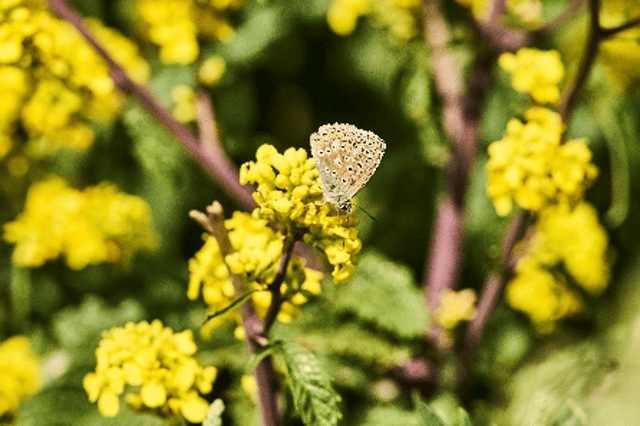
Wildflower hay meadows are being established across Saltram East to create habitat for insects, butterflies and farmland birds, including skylarks, which are a Red List species of conservation concern in the UK.
Livestock will graze parts of the site between September and March each year to help maintain the species-rich grasslands.
Early monitoring has already shown encouraging results. Just one year after sowing, National Trust surveys recorded more than double the number of plant species compared with the original baseline, including widespread establishment of yellow rattle – often referred to as the "meadow maker" because of its ability to encourage diverse wildflower growth. The site's first breeding pair of skylarks has also been recorded.
The habitat restoration forms part of the National Trust's first Biodiversity Net Gain (BNG) bank, with plans to increase biodiversity across the site by at least 10 per cent over the next 30 years through meadow creation, woodland planting and restoration of historic Devon hedgerows.
The work has been supported by The National Lottery Heritage Fund.
Jez McDermott, General Manager for the National Trust at Saltram, said: "The opening of Saltram East Country Park is a landmark moment for Plymouth and for Saltram. We're giving people access to beautiful green space that had never been open to the public before, while also creating new habitats where nature can flourish.
"This investment in access, wellbeing and nature means more people can enjoy everything Saltram has to offer. Whether you're walking, wheeling, cycling, spending time with family or simply taking a moment to enjoy the views, we hope Saltram East becomes a place that people return to for generations to come."
The National Trust says the additional green space is particularly important as thousands of new homes are being built within five miles of Saltram.
The estate already attracts around one million visits each year, and the expansion is expected to provide further opportunities for recreation, active travel and improving health and wellbeing.
Lisa Dodd-Mayne, Executive Director, Partnerships and Place at Sport England, said: "Access to nature shouldn't be a luxury. In a growing city like Plymouth, these new trails will make it easier for more people to build active travel into everyday life, get outdoors and enjoy the health and wellbeing benefits of green spaces close to home. As one of Sport England's Place Partnerships, Plymouth is helping tackle inequalities through physical activity so that everyone has the opportunity to be active."
Visitors will be able to explore four linked routes – Meadow Path, Turnpike Trail, Wixenford Way and The Dell – taking in meadows, historic landscapes and views across the city.
Saltram East will continue to develop over the coming years, with plans to establish a community forest featuring up to 12,000 new trees this winter through support from Plymouth and South Devon Community Forest.
The site will also become one of the National Trust's 20 Green Corridors being created across the country to improve habitat connectivity and access to nature.
Built in the 18th century and surrounded by a historic landscaped park designed by renowned landscape architect Lancelot "Capability" Brown, Saltram is one of Plymouth's best-known heritage attractions. The estate, which came into National Trust care in the 1950s, combines nationally important historic collections with extensive parkland and woodland, making it one of Devon's most popular outdoor destinations.
Visitors will be able to access Saltram East via several pedestrian entrances or through Saltram's main visitor car park, with direct links to National Cycle Network Route 27 encouraging travel on foot or by bike. Dogs are welcome throughout the new country park, although they must be kept on leads in signed grazing areas while livestock are present between September and March.
The opening of Saltram East marks one of the most significant expansions of public green space in Plymouth in recent years, creating new opportunities for recreation while helping to restore habitats and support wildlife for future generations.