

Woman who overcame anxiety at Devon horse charity returns as researcher
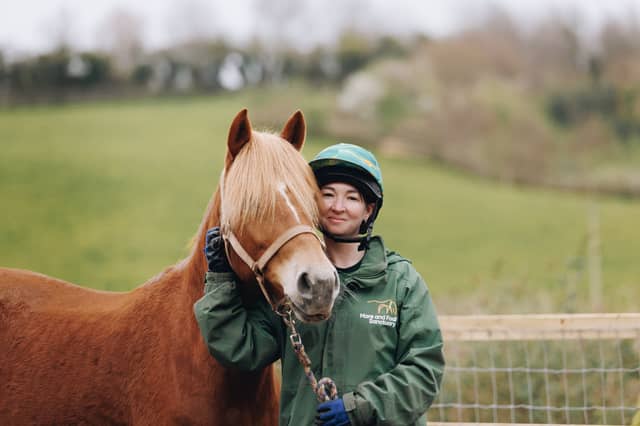

Eva Novi, 35, has returned to the Mare and Foal Sanctuary in Devon as a postgraduate researcher to investigate how horses can help children and young people overcome anxiety and other challenges, building on her own experience of overcoming severe anxiety with the charity's support.
A young woman who overcame severe anxiety with support from a Devon horse charity has returned as a postgraduate researcher to investigate how horses can help children and young people.
For Eva Novi, 35, Coombe Park’s Education and Equestrian Centre near Totnes played a significant role in helping her overcome severe anxiety.
She said: “My journey really began here, through the This Girl Can Exercise with Equines programme, funded by Sport England.”
“At the time I struggled to find the confidence to leave my house.”
“Coming to Coombe Park near Totnes felt like a huge personal challenge, but once I was here, with the horses and the team, I didn't look back.”
That sense of peace and purpose, and the calm acceptance from the horses, showed me that things could be different and that I could be okay."
The Mare and Foal Sanctuary’s therapeutic equine-assisted programmes offer support to people who may have struggled to find the right help elsewhere, including those experiencing anxiety, low confidence, social isolation and other challenges.
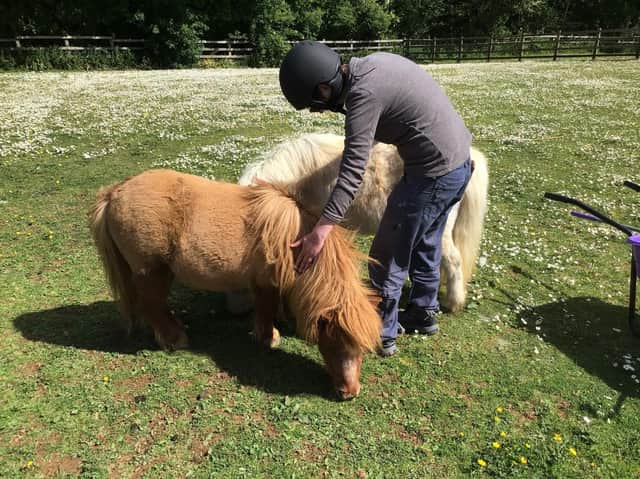
After completing the six-week course, Eva decided to stay on as a volunteer and at the time, joked: “You're not getting rid of me!"
She later joined the team at the Mare and Foal Sanctuary’s Honeysuckle rehabilitation yard in Newton Abbot, where she fully immersed herself in the daily care of rescued ponies and horses.
She showed her dedication even further with a 10,000 feet skydive to help raise funds for the charity.
Eva had quickly gained confidence and decided to take the leap and move to Scotland to study Human Animal Interaction at master’s level to further her interest in equine assisted learning.
For her dissertation, Eva knew that she wanted to return to the sanctuary.
She began working with The Mare and Foal Sanctuary’s Equine Assisted Services (EAS) team on a project that uses a qualitative psychological method known as Photovice, where participants express feelings and stories through pictures rather than questionnaires or numbers.
She worked with a group of young EAS participants, all aged roughly 7 to 21.
Eva assigned a disposable camera to each person.
The camera stayed safely at the yard and came out during every session across a six-week programme.
The young people took 3 photos each session, one at the beginning, one in the middle and one at the end, with no creative rules.
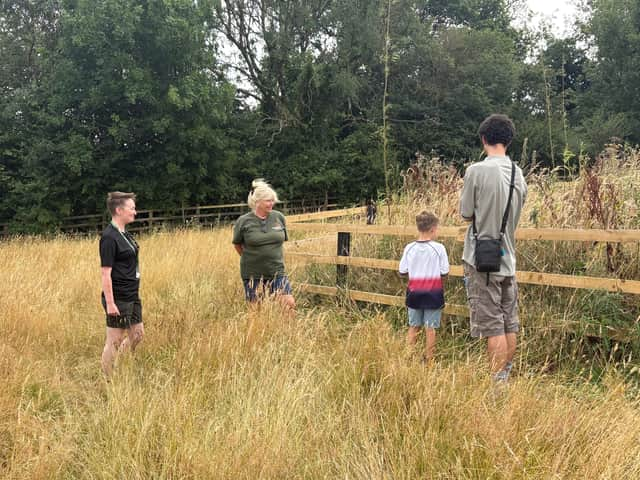
They were encouraged to choose what to photograph based on how they felt in the moment.
For example, some captured a quiet corner of the field, a favourite grooming brush, a horse’s eye or the sky.
Alongside the photographs, each young person also noted down what they had chosen to photograph and why.
After the six-week programme, Eva began months of detailed thematic analysis from her base in Scotland, where she used the images and notes together to explore how emotions develop during individual sessions and throughout the programme.
She looked for patterns in the images and the stories that emerge, while understanding how the changes in the participant’s emotions relate to time spent with horses.
When reflecting on her study, Eva said: “There is a lot of research that looks at heart rates and statistics.”
“That's important, but it can miss the stories behind the numbers.”
“Not everyone finds it easy to put feelings into words.”
She added: “For many people, especially young people, showing you something through a photograph can be more natural than trying to explain it.”
“I want to capture those journeys in a way that feels accessible to them.”
The approach is still relatively new in equine assisted services, with Eva’s study potentially being one of the first of its kind in the field.
The Mare and Foal Sanctuary's Head of Education and Equine Assisted Services, Dawn Neil, said the charity is proud to welcome Eva back and support her research.
Dawn said: "Eva's journey is a powerful example of what can happen when you give someone time, space and a safe connection with horses.”
“She first came to us struggling with anxiety and found her confidence growing week by week alongside the horses.”
“Now she's back as an academic, helping us learn more about how therapeutic time with our rescued horses and ponies impacts our participants' thoughts and feelings.”
"We know that many of our participants respond best to approaches that are creative and reflective rather than purely traditional impact measure surveys.”
“Projects like this help us understand those responses in more depth.”
Eva has now completed her master’s and has since been awarded a distinction for her dissertation.
She is now considering a PhD specialising in equine assisted learning, with the aim of combining academic research with hands-on work.
When reflecting on what the sanctuary has meant to her and what she hopes to achieve in the future, Eva said: "Every time I come back here, I am reminded of how far I have come and how much further we can go.”
“I have heard young people say that their session at the Sanctuary is the best part of their week.”
“I know that feeling.”
“I want more people to have that chance."