

West Devon Heritage: How much do you know about Tavistock’s iconic ‘Pimple’?
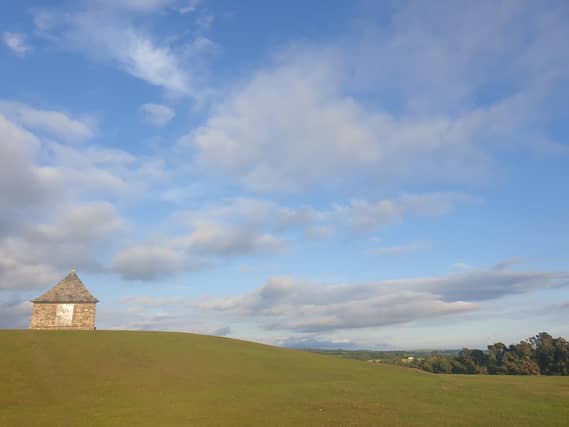

The Grade II listed ‘Pimple’ on Whitchurch Down in Tavistock was designed by architect Sir Edwin Lutyens and once guarded a hidden reservoir serving West Devon homes
A small but distinctive structure overlooking Tavistock is the latest focus in a new West Devon heritage series celebrating the area’s historic landmarks.
Known locally as ‘The Pimple’, the three-sided folly sits on a grassy mound on Whitchurch Down, offering wide views across Dartmoor and into neighbouring Cornwall.
Despite its modest size, the building has strong architectural links and an unusual backstory.
The structure was designed by renowned British architect Edwin Lutyens, whose work includes Castle Drogo and The Cenotaph.
At Whitchurch Down, Lutyens created a triangular gateway building to guard the entrance to an underground reservoir that once supplied homes along Down Road.
Now Grade II listed, the folly is constructed from local Hurdwick stone, a distinctive green volcanic stone quarried just north of Tavistock and widely used in the town’s historic buildings.
Its roof is made from Delabole slate and finished with a decorative finial, the feature that earned it the nickname ‘The Pimple’.
The building stands on a circular base which doubles as seating, blending function with design.
While the reservoir beneath has long since fallen out of use, the structure itself remains a well-known stopping point for walkers and families exploring Whitchurch Down.
West Devon Borough Council says the spotlight aims to highlight heritage beyond the area’s better-known landmarks.
The council said the feature “shows Lutyens’ skill at small scale too, shaping a small structure into something that lifts a public place”.
Residents are being invited to share photographs, memories or sketches connected to Whitchurch Down as part of the ongoing #WestDevonHeritage campaign.