

Yet more livestock to be lost on Dartmoor
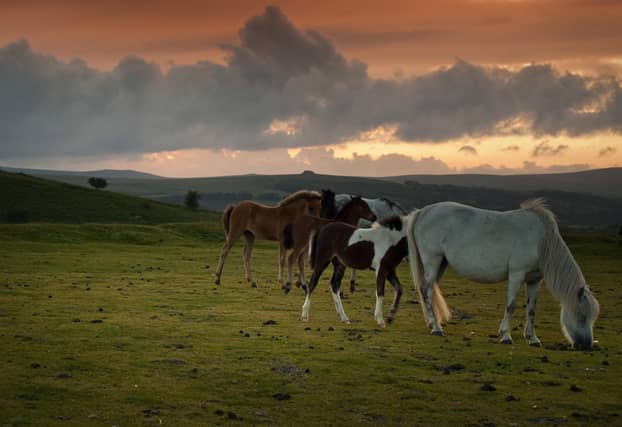

PHOTO 1 - © Miles Wolstenholme PHOTO 2 - © Guillen Perez In the latest move by the Government’s watchdog for nature, Natural England, it appears that even more livestock will have to be removed from Dartmoor. Although ‘The Moorlander’ has been unable t
PHOTO 1 - © Miles Wolstenholme
PHOTO 2 - © Guillen Perez
In the latest move by the Government’s watchdog for nature, Natural England, it appears that even more livestock will have to be removed from Dartmoor.
Although ‘The Moorlander’ has been unable to get access to the letters sent out to commoners, it is understood that whilst the current stewardship agreement is due to end and another yet to be agreed, Natural England have advised that grazing levels on certain parts of the Moor remain too high and the state of the Sites of Special Scientific Interest (SSSI) is worryingly poor.
This has led to breeding populations of moorland birds such as golden plover, red grouse and ring ouzels declining at such a rate as to see them soon extinct in the area.
‘The Moorlander’ previously reported on Natural England’s demands back in October, 2020, when commoners were left reeling at the announcement that they would have to reduce their flock levels, as Natural England put it, ‘as close to zero as possible’. Commoners were told that they would not be allowed to overwinter their stock on the moor, which meant that those who had always done so lacked the infrastructure to house so many animals on the home farm.
Natural England are now said to have decided that in summer, at least 50% of livestock units should be cattle or ponies rather than sheep and that ‘except for pony herds’, winter grazing will need to be justified through clear and specific environmental outcomes that require winter stocking”.
However, Charlotte Faulkner, Chair of the Dartmoor Hill Pony Association, has said that this new edict will be the end of the hill ponies too.
She said: “The Government agency Natural England has issued an edict which will result in the cull of more than 900 semi-wild Dartmoor Hill Ponies in 2023, reducing the entire population to 100. Is this what the public wants done of their behalf? I have already heard of ponies being shot, please do your part and secure the future of these ponies who have survived thus far a population against all the odds. We must not let them down.”
In a social media post, Charlotte gave some background as to her plea for help:
‘There are 30+ Dartmoor commons, most of which are in a Higher Level Stewardship agri-environment contract with the RPA, negotiated by Defra’s agent Natural England. The current 10-year HLS contracts are coming to an end, before the new Environmental Land Management scheme for the uplands has been fully designed by Defra. It has been agreed that a 5-year HLS rollover contract can be agreed in the meantime and the process to do this is currently underway.
Each common has a constituted Association of Commoners with grazing rights and these are the legal entities that enter the contracts. The attached email (NE letter re HLS 5yr rollover) was sent from Natural England to the Commoners’ Associations in February. As you will see, this explains that numbers of sheep, cattle and semi-wild Dartmoor Hill Ponies will be cut by at least a further 50%. One common which has received the stocking rates required in order to enter a ‘rollover’ which requires a cut of 90%. The current level of 60 ponies on that common, has been cut to 5.5. We have been advised that at least seven commons will be issued a 90% reduction of livestock.
Dartmoor commons are the only place where the Native Semi-wild Dartmoor Hill Pony population is found. For the last 10 years (but not previously) ponies have been included in the HLS stocking calendars. There are currently 1,000 breeding Native Semi-wild Dartmoor Hill Ponies. The best-case scenario under this latest edict would leave 500 Dartmoor Hill Ponies in the entire population but, in fact, it will be considerably lower. Not only because many commons will be asked to cut by up to 90%, but also because they can be ‘swapped out’ for cattle. We are already hearing commoners, who are desperate to have as many commercial livestock as possible within the overall limit say ‘If Fred gets rid of one pony allowed to graze for 12 months in a year, we could replace it with 2 cattle allowed to graze for 6 months.’ So, in fact, the numbers of ponies remaining will be significantly lower. And it is a dreadful social experiment, pitching one commoner against another with farm business survival at stake.’
The Moorlander published a statement in the last edition, written by Geoffrey Cox MP with other local Conservative MPs which responded to Natural England’s proposal, which stated: “It seems that valuable and constructive work has now been abandoned by Natural England which has issued apparently peremptory limits on grazing, which would have a significant adverse impact on farm businesses (especially tenants), rendering some, if not many, no longer viable. It would also destroy the ancient traditional hefted flocks, which instinctively know the boundaries of their own common and are themselves a prized part of the unique life and culture of Dartmoor.”
Mr Cox has managed to secure a parliamentary debate later in April, where MPs will discuss whether Natural England’s management of the moor is being carried out to the benefit of those who live and work there as well as for the protection of the biodiversity.
Dave Slater, the South West regional director for Natural England, has argued: “Dartmoor contains three of the largest moorland SSSIs in the South West, but none of these are in a favourable condition, with rare moorland birds all but disappearing from the area and precious peatland habitats damaged. The right type of grazing is fundamental to restoring the health of these moors.”