Residents in Bere Ferrers and Bere Alston to benefit as bus timetable change takes effect on Easter Monday (Image: Google Maps)
Search


03 Apr 2026

Please allow ads as they help fund our trusted local news content.
Kindly add us to your ad blocker whitelist.
If you want further access to Ireland's best local journalism, consider contributing and/or subscribing to our free daily Newsletter .
Support our mission and join our community now.
To continue reading this article, you can subscribe for as little as €0.50 per week which will also give you access to all of our premium content and archived articles!
Alternatively, you can pay €0.50 per article, capped at €1 per day.
Thank you for supporting Ireland's best local journalism!

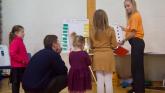
Tim Locke sharing the story of his mother and father, Ruth and Raimund Neumeyer at Holocaust Memorial Day - Credit: Caitlin Taylor

Exeter marked Holocaust Memorial Day today (Tuesday 27 January) with a service at Exeter Cathedral that brought together civic leaders, faith representatives, students and members of the public to remember the victims of the Holocaust, subsequent genocides and reflect on lessons for the present day.
The service, held at 10am, formed part of a wider programme of remembrance and education across the city.
This year’s theme, Bridging Generations, focused on the importance of passing on memories and testimony as the number of survivors continues to decline.
The Lord Mayor of Exeter, Councillor Kevin Mitchell, attended alongside other dignitaries, student ambassadors and local primary school choirs.
At the Cathedral, the service began with a welcome message from the Dean, followed by a candle lighting carried out by the Lord Mayor of Exeter, Chair of Devon County Council, Deputy Lord Lieutenant, Dean of Exeter Cathedral, Exeter Mosque, President of Exeter Synagogue, Devon Faith and Belief Forum, Romani Community, Chair of Devon SACRE, student ambassadors and primary school pupils.
Holocaust Memorial Day is observed each year on 27 January, marking the liberation of Auschwitz-Birkenau, the largest Nazi death camp.
READ NEXT: Yellow weather warning for Exeter as further heavy rain follows Storm Chandra
The day remembers “the millions of people murdered in the Holocaust, under Nazi persecution and in the subsequent genocides in Cambodia, Rwanda, Bosnia and Darfur”, while also honouring survivors and challenging society to apply the lessons of history today.
Speakers at the cathedral reflected on the breadth of communities affected by Nazi persecution and later genocides.
University of Exeter researcher David Tollerton said the day memorialised not only Jewish victims but also “Roman communities, Slavic peoples, Jehovah Witnesses, the disabled, homosexuals and political opponents”.
He added that Holocaust Memorial Day also recognised genocides around the world, noting that “violence and suffering are ongoing features of our world” and that since January 2025 there had continued to be major conflicts and loss of life globally.
Following this, Liz Small, a Devon Romani community representative, spoke about the often-overlooked persecution of Romani people under the Nazi regime.
She told the congregation that Romani communities were among the first groups targeted and suffered devastating losses.
“In some countries in Europe, they were wiped out entirely,” she said, adding that while the official figure of Romani deaths stands at around half a million, anecdotal evidence suggests the true number is far higher.
She also described how, for decades after the war, Romani survivors were denied recognition of their experiences.
A candle-lighting ceremony formed a central part of the service, with individual candles representing different victim groups.
Speaking to Exeter Today, Tracey West, who lit a candle in memory of disabled people killed during the Holocaust, said events like the one in Exeter helped ensure smaller groups were not reduced to “a footnote”.
She noted that around 250,000 disabled people were killed at Auschwitz-Birkenau alone and said education and discussion were essential to keeping the history alive.
“When the stories and the history die, the lessons die,” she said, stressing the importance of schools, dialogue and public awareness in preventing future atrocities.
Adding to this, Tracey emphasised the importance of hope and discussion: “hope is the overriding emotion that runs through events like today, hope for the future, hope for youngsters to learn from the speakers, hope that they will listen and pay attention, that they will think that this event is not so far back and want to find out more.”
She said that this history must be discussed, educated and listened to by all ages, that it’s the “dialogue, it’s the talking” that is so fundamental for keeping these topics alive.
“We have to keep talking, we cannot let history die when those last few remaining souls pass away.”
Personal testimony was also shared by Tim Locke, who spoke about his family’s Kindertransport story and the experiences of Ruth and Raimund Neumeyer.
He said individual stories helped make the scale of the Holocaust comprehensible, arguing that “the number of six million Jews doesn’t mean anything to people” without personal narratives.
Drawing parallels with modern events, he warned how quickly intolerance can escalate if left unchallenged and emphasised the importance of tolerance and opposing discrimination in all its forms.
Deborah Parsons, Canon Chancellor at Exeter Cathedral and inter-faith adviser for the Diocese of Exeter, said hosting the event allowed people from across civic and community life to come together to remember both tragedy and acts of goodness.
She said hearing testimonies from speakers helped remind attendees of “our common humanity and sometimes mankind’s inhumanity”, and encouraged people to become “bridge builders for peace”.
Organisers said the service aimed not only to remember the past but also to encourage reflection on contemporary conflicts and the need for continued education.
As the service concluded, speakers returned to the theme of hope, particularly that younger generations would continue to learn from history and carry its lessons forward.

Subscribe or register today to discover more from DonegalLive.ie
Buy the e-paper of the Donegal Democrat, Donegal People's Press, Donegal Post and Inish Times here for instant access to Donegal's premier news titles.
Keep up with the latest news from Donegal with our daily newsletter featuring the most important stories of the day delivered to your inbox every evening at 5pm.