

'Victory’ for Dartmoor hill ponies as Government confirms new protections
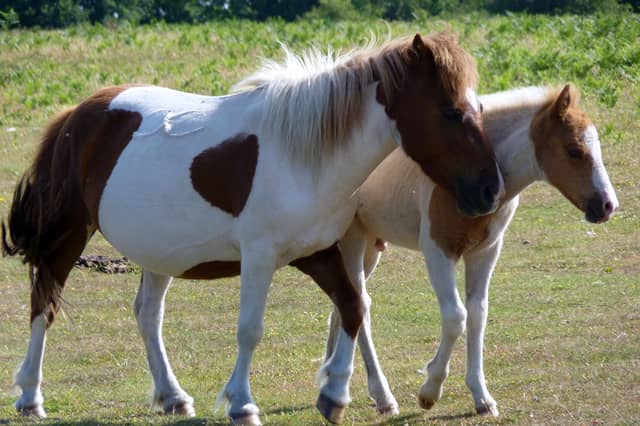

The Government has confirmed new protections for Dartmoor's semi-wild hill ponies after months of campaigning, removing them from livestock stocking rate calculations and safeguarding their future
The Government has announced new protections for Dartmoor's semi-wild hill ponies, bringing to an end months of uncertainty over their future and prompting celebrations from campaigners and commoners.
The measures, announced on Wednesday, July 15, mean Dartmoor ponies will no longer be included in livestock stocking rate calculations under new Environmental Management agreements.
Campaigners had warned that counting ponies alongside sheep and cattle could force commoners to reduce pony numbers to maintain viable farm businesses.
The Government has also confirmed that pony numbers will be monitored across Dartmoor to ensure they remain stable and that a dedicated pony supplement will be introduced within farming schemes.
Describing the changes as a landmark moment for the future of the semi-wild herds, commoning, biodiversity and Dartmoor's cultural heritage, the Dartmoor Hill Pony Association welcomed the measures.
They implement Recommendation 27 of the independent Fursdon Review, published in 2023, which recognised Dartmoor's pony population as genetically important and invaluable for conservation grazing.
The review recommended that ponies should not be linked with cattle when calculating stocking rates under government farming schemes.
Charlotte Faulkner, chair of the Dartmoor Hill Pony Association, thanked ministers for responding to public concern.
She said: "We would like to thank the Secretary of State for listening to over 220,000 people who care about the future of the semi-wild Dartmoor Hill Pony herds.
"This will support Dartmoor's biodiversity, culture and tourism, keeping Dartmoor as we know and love it for generations to come."
She added: "This is wonderful news for Dartmoor's ponies and for everyone who loves the moor.
"For months, pony keepers, commoners and supporters have been warning that future grazing agreements could unintentionally put these precious herds at risk. Today, the Government has listened.
"This means Dartmoor's ponies are being recognised for what they are: rare, native, semi-wild herds that are part of Dartmoor's history, its biodiversity and its future."
Ms Faulkner said removing ponies from stocking rate calculations was "exactly the assurance we have been asking for" and would mean commoners should no longer face "the impossible position of having to choose between keeping ponies on the moor and maintaining viable farm businesses."
She also thanked Defra, Natural England, Exeter MP Steve Race and the more than 220,000 people who backed the campaign.
"Today is a day to celebrate," she said. "Dartmoor's Hill Ponies belong on Dartmoor, and today's announcement is a major step towards securing their future where they belong: on the moor."
The Association said the new arrangements would help protect the semi-wild herds while supporting biodiversity, farming and Dartmoor's cultural heritage.
Valued as conservation grazers, Dartmoor hill ponies can tackle coarse vegetation, including Molinia grass, in exposed parts of the moor where other livestock may struggle to graze.
Joss Hibbs, secretary of the Dartmoor Hill Pony Association, said the Government's decision marked the start of the next stage of work.
She said: "This is a brilliant result, but it is also the beginning of the next chapter. We now want to work constructively with everyone involved to make sure these protections are delivered on the ground.
"Today has shown what can happen when commoners, campaigners, politicians and the public come together for Dartmoor. It is a victory for the ponies, but also for the moor itself."
Public attention on the issue has grown significantly in recent months, with campaigners warning that proposed grazing arrangements could have led to substantial reductions in Dartmoor's semi-wild pony population.
More than 220,000 people supported a campaign calling for stronger protections, while MPs from across the political spectrum backed calls to implement the Fursdon Review's recommendations.
According to the Government, around 900 to 1,500 Dartmoor hill ponies currently graze on the moor.
Looking ahead, the Dartmoor Hill Pony Association said it now wants to work with Defra, Natural England and the Dartmoor Land Use Management Group to ensure the new arrangements are successfully delivered for commoners, the ponies and the wider moor.
The Moorlander has contacted Devon’s MPs for their response to Wednesday's announcement.