

Devon businesses look to Budget as pressure over rates continues to mount
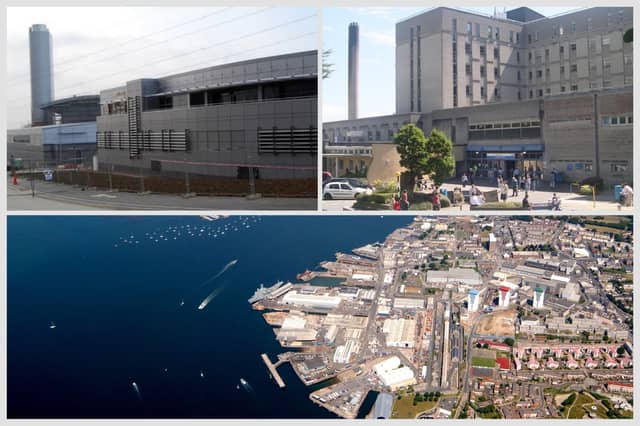

From major employers and hospitals to supermarkets and holiday parks, new figures highlight the scale of business rateable values across Devon as firms await potential Budget relief
Military bases, hospitals, supermarkets and energy plants are among the organisations with the highest rateable values for business rates across Devon, according to fresh analysis.
Devonport Royal Dockyard has the highest rateable value for business rates, at more than double that of the second-placed Langage power station and nearly triple that of Derriford Hospital, which ranked third.
Supermarkets and other major stores, such as IKEA, also feature high up the rankings.
Meanwhile, the largest home-grown Devon-based firm is Exeter’s Stovax Heating Group, with a rateable value of more than £1.6 million. Discount retailer Trago Mills is not far behind, at £1.3 million.
The data, provided by all 10 councils in Devon that collect business rates, covers more than 41,200 businesses and organisations across the county, although some will qualify for certain reliefs and exemptions.
Business rates are effectively the equivalent of council tax on domestic properties and are seen by many sectors as a key issue.
Both Devon politicians and business representatives are hoping the Chancellor, John Healey, might alleviate the pressure being felt by firms in his Budget on Wednesday, 28 October.
While it is usually claimed that councils retain around half of the business rates they collect, this is not the case in counties such as Devon, where the two-tier system remains in place outside Plymouth and Torbay.
This means that half of the business rates collected is split between different councils and emergency services, while the rest returns to the Treasury.
The Local Government Association has previously stated that the business rates income returned to Westminster is notionally used to fund grants to local authorities.
However, it is difficult to determine whether the money is returned in proportion to how much each council collects.
Changes made this April led to the total rateable value of all businesses in England and Wales rising to £84.4 billion, up from £70.8 billion in the 2023 review, according to government figures.
There are calls from local politicians for more of the business rates income to be retained locally, and efforts were under way under former Prime Minister Keir Starmer to overhaul the proportion of business rates retained by councils.
“Personally, I would like the government to allow councils to retain a far higher percentage or pounds-and-pence value from business rates collected so they can be reinvested locally in economic activity and ventures rather than simply being absorbed into Treasury coffers nationally,” said Councillor Paul Hayward (Independent, Axminster), the cabinet member for assets and economy at East Devon District Council, who also holds a seat at County Hall.
Another frequent target in the business rates crosshairs was also mentioned by Cllr Hayward: online retailers.
“I would like to see an increase in business rates or charges for online retailers and remote warehouses to provide additional relief for traditional high-street retailers,” he said.
Business rates were revalued earlier this year as part of the government’s three-year cycle.
The Valuation Office Agency (VOA) calculates rateable values, which are currently based on rental values in 2024, and the government sets the multiplier used to calculate business rates bills.
A 20 per cent reduction for pubs, social clubs and live music venues is already scheduled to begin in April next year, on top of existing reliefs for small businesses and certain parts of the hospitality sector.
However, Devon businesses, many of which are heavily reliant on tourism, will be hoping for broader reliefs across the hospitality sector or other changes that could help level the playing field with online retailers.
While the smallest businesses are not liable for business rates in certain circumstances, those with just one property with a rateable value below £12,000 are currently exempt.
Hundreds of Devon’s pubs, hotels, caravan parks and attractions, however, are caught in the business rates net.
Hertfordshire-based Bourne Leisure’s Devon Cliffs Holiday Park in Exmouth features in the top 10, while Somerset-based FWSC (Ladram), the owner of Ladram Bay Holiday Park in East Devon, ranks among the top 100 businesses, with a rateable value of £700,000.
Berkshire-based Haulfryn Group’s Finlake Holiday Park in Teignbridge also features in the top 100.
Helen Wylde-Archibald, chief executive of the Devon Chamber of Commerce, said business rates remained a “significant challenge” for many businesses in the county.
“The issue is relatively simple: the calculation is based on the rateable value of a property, with a multiplier applied,” she said.
“While that may reflect the building being used, it does not reflect the profitability of that business.
“At a time when businesses have experienced substantial increases in operating costs over the last decade, alongside wider cost-of-living pressures, the burden of fixed property costs has become increasingly difficult to absorb.
“A business can be making a loss and still face a substantial business rates bill.”
She added that some businesses were concerned that investing in their premises could lead to a higher rateable value and, consequently, increased future costs.
This could place additional pressure on bricks-and-mortar businesses already competing with online operators that often have “significantly lower property overheads”.
The analysis of Devon’s businesses assessed the rateable values of organisations and businesses liable for the tax across all 10 Devon councils that collect it.
Only some councils publish the latest business rates bills, making it difficult to compare the actual charges paid by different organisations.
However, Plymouth City Council does disclose current bills, showing the dockyard’s charge at £7.6 million, the Langage power plant’s at £3.2 million and Derriford Hospital’s at nearly £3 million.
Rateable value is used to calculate an organisation’s business rates bill, so a higher rateable value is likely to result in a larger bill.
However, different rates, exemptions and exclusions can apply depending on the type of organisation.
A rateable value represents the amount for which a property could be rented annually.
That figure is then multiplied by a rate, expressed in pence per pound, with the applicable rate and any allowable reliefs determining the final bill.
Public sector organisations, such as NHS trusts and schools, may also have their business rates liabilities factored into their funding from central government.
The University of Plymouth’s main campus features among the top 10 largest rateable values across Devon, as does Lidl’s distribution centre at Chillpark Brake in Clyst Honiton.
Torbay Hospital, Plymouth’s waste-to-energy plant and the naval base, including HMS Drake and RNAD Bullpoint, also feature in the top 10.
Among Devon-based firms headquartered in the county, Exeter’s Stovax Heating Group and Trago Mills rank 25th and 40th, respectively. Exeter Airport has a rateable value of just under £1 million.
Plymouth-based Princess Yachts has a rateable value of £900,000 and a business rates bill of £466,200 for its Coypool Road site in Plymouth.
However, the company has a total of eight properties included in the data, making it a significant contributor.
South Hams-based tungsten mining firm Drakelands Restoration, with a rateable value of £880,000 and a bill of £455,840, is among the top 70.
So are Plymouth-based car retailer Vospers (£865,000 rateable value and £436,508 bill) and specialist computing firm Plessey Semiconductors (£850,000 rateable value and £440,300 bill).
Nearby specialist industrial firm Fine Tubes, also headquartered in Plymouth, has a rateable value of £745,000, resulting in a bill of nearly £386,000.
It ranks among the top 100, alongside health and social care organisation Livewell South West, with a rateable value of £720,000 and a bill of £372,960.
However, Livewell is a community interest company (CIC), a status that can qualify it for discretionary relief.
Regarding other possible changes, Cllr Hayward said the cliff edge whereby small increases in a property’s value can result in large, unexpected business rates bills should be removed.
He called for a system of transitional tapering, with charges applied on a sliding scale, as well as lower multipliers for hospitality, retail and leisure businesses to “boost high street trade and encourage investment in our struggling high streets”.
“I believe we should impose punitive rates on the businesses that pose hazards to the high street,” he added.
He also argued that landlords should be charged if they could not reasonably explain why their properties had remained empty for more than 12 months.
The Devon Chamber’s Wylde-Archibald said she welcomed the government’s ongoing work to review and reform the system.
“Discussions around improving Small Business Rate Relief, encouraging investment in property improvements, and simplifying the system are all positive steps,” she said.
“However, our members continue to tell us that the current system feels increasingly disconnected from the realities of trading in a challenging economic environment.
“As we approach the Budget, we would like to see continued progress towards a business rates system that is simpler, more predictable and one that actively supports investment rather than discouraging it.”
She added that Devon was home to thousands of small and medium-sized businesses that wanted to invest, create jobs and grow, but needed “confidence that improving their premises will not automatically lead to disproportionate increases in costs”.
“We would welcome measures that strengthen support for smaller businesses, provide greater certainty over future liabilities and ensure traditional bricks-and-mortar firms can compete on a more level playing field in an increasingly digital economy,” she said.
“Ultimately, the best business rates system is one that supports growth, encourages investment and helps businesses continue contributing to their local economies and communities,” she added.
Top 10 organisations by rateable value in Devon
- Devonport Royal Dockyard Ltd – Rateable value: £14,800,000 | Current charge: £7,666,400 | Location: Plymouth
- EP Langage Ltd (Langage Power Station) – Rateable value: £6,270,000 | Current charge: £3,247,860 | Location: South Hams
- University Hospitals Plymouth (Derriford Hospital) – Rateable value: £5,770,000 | Current charge: £2,988,860 | Location: Plymouth
- University of Plymouth – Rateable value: £5,430,000 | Current charge: £562,548 | Location: Plymouth
- Lidl Great Britain Ltd (Distribution Centre) – Rateable value: £4,400,000 | Current charge: Not provided | Location: East Devon
- Naval Base Services Department (including HMS Drake and RNAD Bullpoint) – Rateable value: £3,690,000 | Current charge: £1,911,420 | Location: Plymouth
- IKEA Ltd – Rateable value: £3,060,000 | Current charge: £1,698,300 | Location: Exeter
- South Devon Healthcare Trust (Torbay Hospital) – Rateable value: £2,900,000 | Current charge: £1,473,200 | Location: Torbay
- MVV Environment Devonport Ltd (Energy-from-Waste Plant) – Rateable value: £2,500,000 | Current charge: £1,295,000 | Location: Plymouth
- Bourne Leisure Ltd (Devon Cliffs Holiday Park) – Rateable value: £2,050,000 | Current charge: Not provided | Location: East Devon